Before They Blow Up: Inside the Valley's Scrappy, Essential Local Music Scene
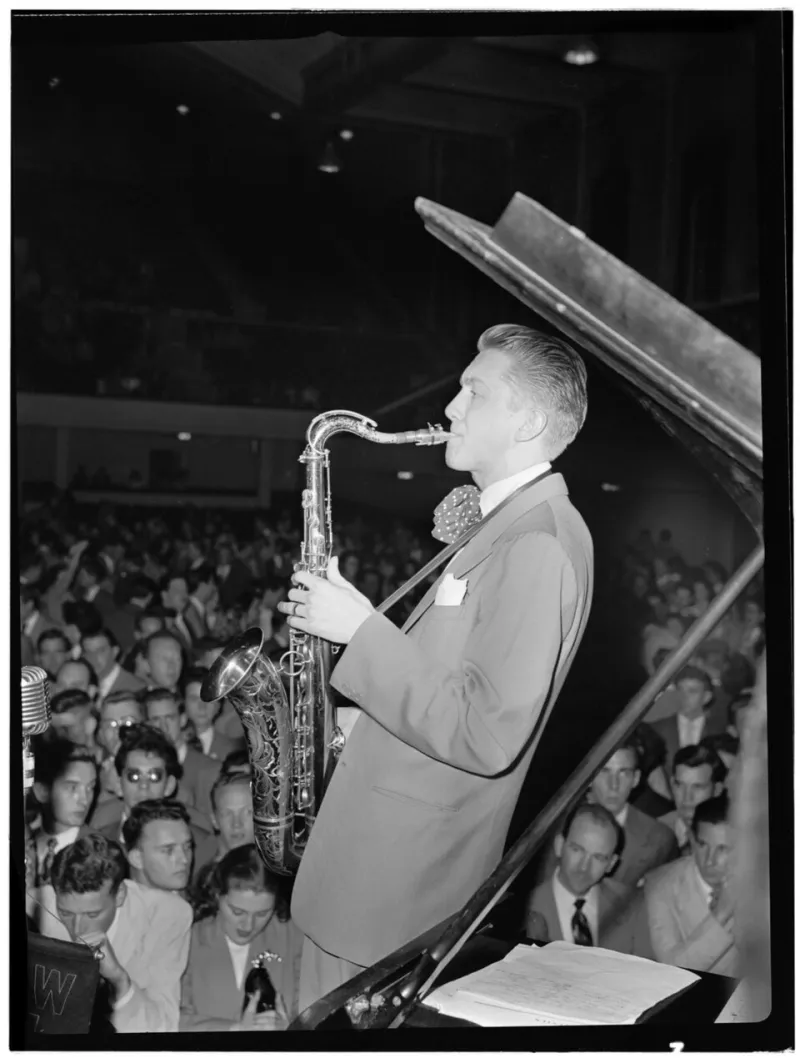
Photo: The Library of Congress, Public domain, via Wikimedia Commons
Somewhere in Tempe right now, a band is loading gear through a back door that's held together with a bungee cord. The soundcheck will run long. The opener will play to eleven people. The headliner will sell out — maybe — and walk away with enough to cover gas and a late-night burrito. And in three years, that same band might be headlining a festival stage in front of twenty thousand people.
This is how it works. This is how it has always worked. And the Valley — Phoenix, Tempe, Scottsdale, Mesa, and all the sprawling connective tissue in between — has a music scene capable of producing exactly that kind of story. It just doesn't always get credit for it.
The Venues Doing the Heavy Lifting
When people talk about Phoenix music, the conversation usually jumps straight to big rooms: Footprint Center for arena-level acts, Talking Stick Resort Amphitheatre for the shed tours, Arizona Financial Theatre for the mid-tier national names. All fine. All useful. But none of them are where the interesting stuff is happening on a Tuesday night.
The real action is at places like The Rebel Lounge on East Indian School, which has been a reliable incubator for punk, indie, and everything in between for years. Or Valley Bar downtown, which manages to book acts that feel both local and genuinely buzzworthy, tucked into a basement space that holds maybe 300 people but somehow always feels like exactly the right size. Or Crescent Ballroom, which occupies that sweet spot between intimate and legitimate — a room where you can see an act that's about to get much bigger and still be close enough to make eye contact.
"There's a gap in most cities between the tiny DIY spaces and the mid-size rooms, and a lot of artists fall through it," says Jamie Okonkwo, a Phoenix-based promoter who's been booking shows across the Valley for the better part of a decade. "What we've managed to build here is a pretty solid ladder. A band can play a house show in Tempe, graduate to The Rebel Lounge, then Crescent, then maybe Marquee Theatre — and by the time they're doing that last step, they've got a real local fanbase."
The People Making It Work
Behind every good venue is someone absorbing a lot of financial stress so that artists can do their thing. Phoenix's venue operators are a particular breed — part music nerd, part small business owner, part community organizer.
Take the team at Trunk Space, the long-running all-ages venue in Grand Avenue Arts District that has become something of a spiritual home for Phoenix's DIY community. The room is small enough that you can practically touch the ceiling, the sound system has seen better decades, and the booking philosophy is aggressively inclusive — experimental noise acts sharing bills with teenage punk bands and touring folk singers from out of state. It shouldn't work as a business model, and yet it keeps working.
"We've never been about money," says co-founder Steph Carrico. "We've been about creating a space where someone who's never played a show before can play their first show, and someone who's been touring for ten years can play a one-off and feel at home. If we can do that, we're doing what we're supposed to do."
That ethos — scrappy, inclusive, community-first — runs through a lot of the best venues in the Valley. It's not always glamorous. But it produces something that more polished scenes sometimes lack: genuine investment from the people who show up.
The Artists Worth Watching
So who's actually coming through these rooms right now?
The Valley's current moment is genuinely diverse in the best sense. The indie rock scene has been quietly rebuilding after a few fallow years, with bands like The Midnight Runners (a Phoenix four-piece with a sound somewhere between Strokes-era New York and desert-baked Americana) drawing bigger crowds at each successive show. The hip-hop scene centered around South Phoenix continues to generate talent at a rate that the rest of the country is starting to notice — artists like Zel the Great and Mina Marez have been racking up regional press and festival bookings that suggest national attention isn't far off.
On the electronic and experimental side, the scene around venues like Monarch Theatre and the rotating warehouse events organized by the Phoenix Electronic Arts collective has developed a reputation that draws attendees from Tucson, Flagstaff, and occasionally further afield. It's not quite the same cultural cachet as Chicago's or LA's electronic scenes, but it's building something that feels sustainable rather than hype-dependent.
Your Guide to Finding the Next Big Thing
If you want to actually go experience this stuff rather than read about it, here's where to start:
The Rebel Lounge (2303 E. Indian School Rd.) — Check their calendar for local-heavy bills on weeknights. The $10-15 ticket price is almost always worth it.
Valley Bar (130 N. Central Ave.) — Downtown's most reliably interesting mid-size room. The basement setting makes everything feel a little more urgent.
Crescent Ballroom (308 N. 2nd Ave.) — Slightly bigger, slightly more polished, but still intimate enough to feel like a discovery.
Trunk Space (1506 Grand Ave.) — All-ages, all-inclusive, occasionally chaotic. Essential.
Monarch Theatre (122 E. Washington St.) — For the electronic and DJ-driven events. Check their Instagram for last-minute bookings.
Beyond the permanent venues, keep an eye on local promoters like Psyko Steve Presents and Stateside Presents, whose social media feeds function as something close to a real-time guide to what's worth seeing.
Why This Matters Beyond the Music
Here's the thing about a healthy local music scene that doesn't always get said out loud: it's not just about the music. It's about having places to go, reasons to leave the house, communities built around something other than consumption. Phoenix is a city that gets accused — sometimes fairly — of being more interested in development than culture. Every packed Tuesday night show at a local venue is a small argument against that narrative.
The artists, promoters, and venue owners grinding it out in the Valley aren't waiting for Phoenix to become a music city. They're already making it one, one sweaty set at a time.
Go find your people. The bungee cord on the back door is holding just fine.
Got a local act or venue we should know about? Hit us up — The Phoenix is always listening.