Spray Cans and Soul: Meet the Phoenix Muralists Turning Forgotten Walls Into Neighborhood Landmarks
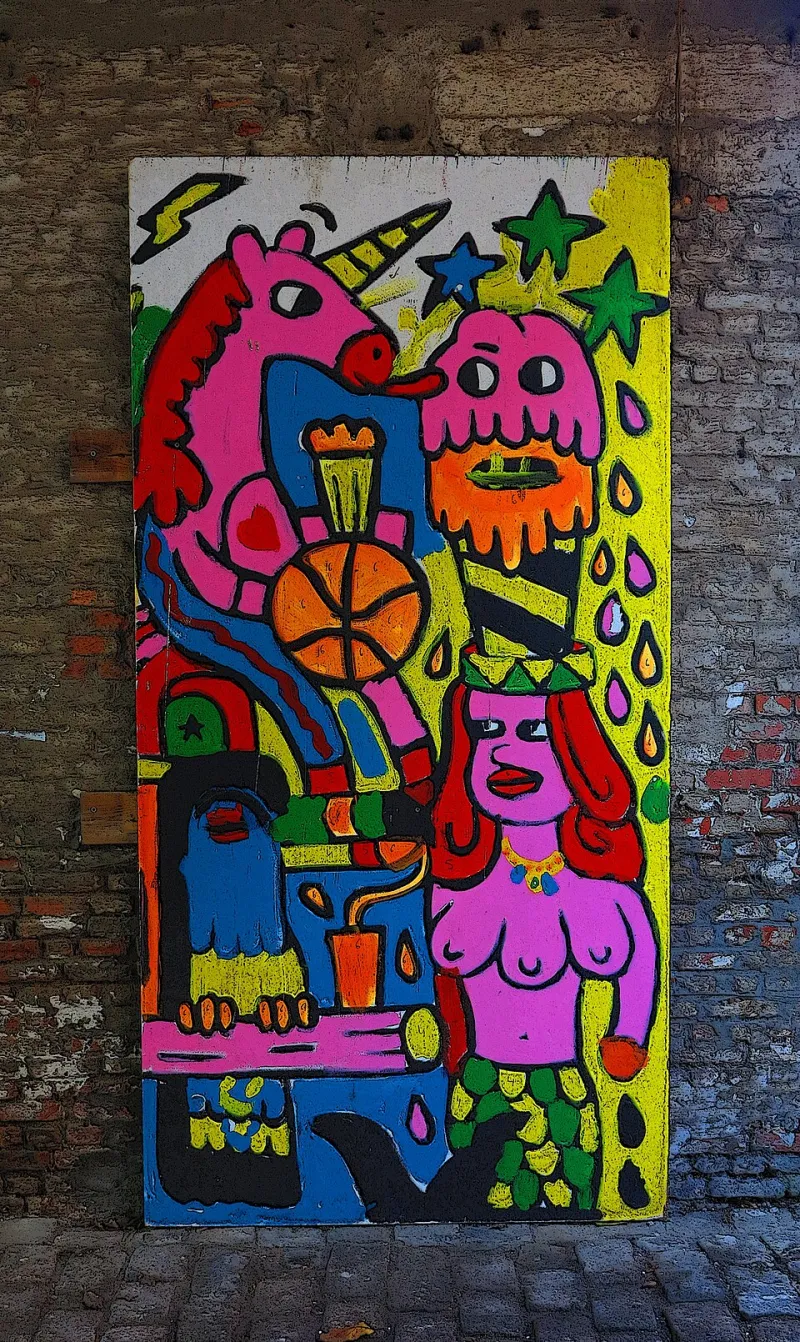
Photo: agracier - NO VIEWS, CC BY-SA 3.0, via Wikimedia Commons
There's a wall on the corner of 7th Avenue and McDowell that used to be the kind of thing you drove past without seeing. Cracked stucco, sun-bleached, tagged over and over again with the kind of graffiti that signals a neighborhood giving up on itself. Today, that same wall pulses with a 40-foot portrait of a Tohono O'odham elder, her eyes tracking you no matter where you stand on the sidewalk. People stop. They take photos. They ask who made it.
That's exactly the point.
Phoenix is in the middle of something that doesn't have a clean name yet — a street art renaissance, sure, but also something more complicated. It's a reckoning with which parts of the city get celebrated and which get ignored. And the people leading it aren't gallery owners or city planners. They're muralists with day jobs, borrowed ladders, and an almost stubborn belief that public space belongs to everyone.
The Artists Making It Happen
Ask around the local art scene long enough and a handful of names keep coming up. Delia Reyes, a South Phoenix native who started painting legally sanctioned murals through a Roosevelt Row arts initiative before branching out on her own. Marcus Tran, a Vietnamese-American artist based in Maryvale who blends traditional Vietnamese lacquer art aesthetics with contemporary graffiti letterforms. And the loosely organized collective known as Desert Bloom, which operates more like a mutual aid network than a traditional art group — pooling supplies, scouting walls, and occasionally bailing each other out when a property owner changes their mind mid-project.
"People assume street art is about ego," Reyes says, standing in front of a piece she finished last month in the Garfield neighborhood. "Like you're just trying to put your name somewhere. But most of what I do is about the people who already live here. I want them to see themselves when they walk outside."
That philosophy drives a lot of what's happening in Phoenix's more overlooked districts — areas like Laveen, Maryvale, and South Mountain, which rarely show up on the trendy neighborhood listicles but are home to dense, multigenerational communities with deep cultural roots.
Legal Gray Areas and Bureaucratic Headaches
Not all of this is happening with permission, and that's where things get complicated.
Phoenix has a formal public art program through the city's Office of Arts and Culture, and there are legitimate pathways for muralists to get commissioned work funded and protected. But those programs tend to favor established artists with portfolios, grant-writing experience, and the time to navigate months of approval processes. For younger or more grassroots artists, that system can feel like it was designed for someone else.
"I've had pieces buffed within a week of finishing them," says Marcus Tran. "Same wall, same neighborhood — but the next artist who came through with a city contract, their work is still up two years later. The process isn't neutral. It reflects who the city already values."
The legal landscape is genuinely murky. Unpermitted murals on private property require property owner consent, but that consent doesn't protect the work from being painted over if the owner sells or changes their mind. Work on public infrastructure — underpasses, utility boxes, retaining walls — requires city approval that can take longer than the artistic moment that inspired it.
Desert Bloom has developed an informal workaround: they focus on vacant commercial properties and negotiate directly with owners, offering to document the process and provide the owner with high-resolution images for their own use. It's a barter system that works more often than you'd expect.
The Gentrification Question Nobody Wants to Ignore
Here's the tension that hangs over every conversation about Phoenix's street art scene: beautiful murals make neighborhoods more photogenic, and more photogenic neighborhoods attract the kind of attention that can price out the very communities the art is meant to celebrate.
It's not hypothetical. Roosevelt Row — once a scrappy arts district where murals covered half the buildings — has watched rents climb steadily as the neighborhood became a destination. Some of the original artists who made it interesting can no longer afford to live or work there.
"I think about this constantly," says Reyes. "I don't want to be the reason someone's grandmother gets displaced. But I also don't think the answer is to leave these neighborhoods looking abandoned. That doesn't protect anyone either."
Desert Bloom has started building community consultation into their process — talking to residents, local businesses, and neighborhood associations before starting a new piece. It slows things down, but the results tend to be more durable. A mural that a community actually wanted is a lot harder to paint over than one that appeared overnight without anyone's input.
Making Phoenix a Public Art Destination
For all the complexity, there's genuine momentum here. The Murals of Merchandise District project, which began as a scrappy weekend event, has grown into an annual gathering that draws artists from across the Southwest. The city's recent investment in arts infrastructure along the light rail corridor has created new legal canvas space. And social media — for all its flaws — has given Phoenix muralists a platform that didn't exist a decade ago.
"People fly into Phoenix and they don't expect to find this," says Tran. "They expect strip malls and chain restaurants. When they stumble onto a block that's covered in incredible work, it changes something. It changes what they think the city is capable of."
That might be the most quietly radical thing about what these artists are doing. They're not just decorating walls. They're writing a different story about Phoenix — one that's messier and more honest than the glossy tourism brochures, and a whole lot more interesting.
The elder on 7th and McDowell is still watching. And more people are stopping to look back.
Know a Phoenix muralist whose work deserves more attention? Reach out to us at The Phoenix — we're always looking for the next story on the wall.