Roots in the Rubble: The Everyday Phoenicians Saving the City's Forgotten Stories
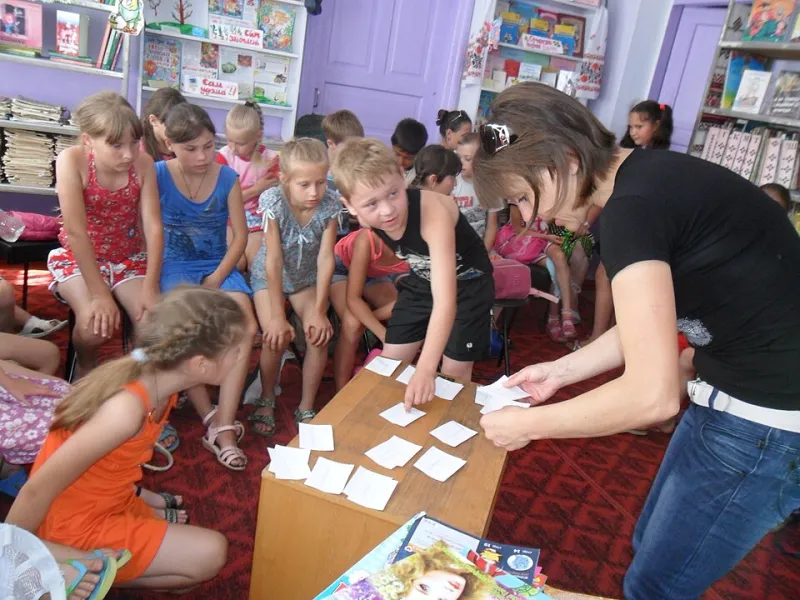
Photo: U.S. Embassy Kyiv Ukraine, Public domain, via Wikimedia Commons
Phoenix has always had a complicated relationship with its own past. A city that prides itself on reinvention — new construction, fresh starts, perpetual forward motion — doesn't always stop to ask what gets left behind when the bulldozers move in. But scattered across the Valley, a loose network of historians, archivists, and plain old curious neighbors are doing something radical: they're writing down what happened before it disappears entirely.
This isn't about dusty academic institutions or grant-funded research centers, though some of those are involved too. It's about the woman in South Phoenix who spent three years collecting oral histories on a borrowed recorder. It's about the Maryvale resident digitizing decades of community newsletters in his garage. It's about a generation of Phoenicians who looked around at their changing neighborhoods and decided someone had to be the keeper of the flame.
South Phoenix's Long Memory
If you want to understand why community archiving matters so much right now, start in South Phoenix. For much of the twentieth century, this was the neighborhood where Phoenix's Black community built something extraordinary — churches, businesses, civic organizations, a social fabric stitched together against the backdrop of formal segregation. The area had its own economy, its own culture, its own rhythm.
A lot of that physical landscape is gone now. Redevelopment, highway construction, and decades of disinvestment stripped away buildings that held collective memory. What remains are the people who lived it, and the people who love them enough to listen.
Projects like the South Phoenix Oral History Initiative — a grassroots effort connecting longtime residents with younger volunteers trained in interview techniques — are working to get those stories into formats that can actually survive. Recorded testimonies, annotated photograph collections, hand-drawn neighborhood maps marked with the locations of places that no longer exist. It's painstaking work, and it's entirely volunteer-driven.
"People think history lives in courthouses and libraries," said one longtime organizer involved in the effort. "But for communities like ours, it lives in kitchens and front porches. You have to go there to find it."
Maryvale and the Archive in the Garage
Headed west across the Valley, Maryvale tells a different but equally urgent story. One of Phoenix's most densely populated and predominantly Latino neighborhoods, Maryvale has been home to waves of immigrant communities since the mid-twentieth century — Mexican families, Central American refugees, more recently Somali and Burmese newcomers. Each wave brought its own traditions, languages, and ways of making a life.
Documenting that layered identity is the obsession of a small but growing circle of community members who've taken it upon themselves to build informal archives. Think church bulletins, quinceañera programs, youth soccer league rosters, neighborhood association minutes — the kind of ephemera that nobody thinks to preserve until it's gone.
One resident, a retired postal worker who asked to be identified only by his first name, Ernesto, has been scanning and cataloging documents related to Maryvale's community organizations for the better part of a decade. His collection now spans thousands of items, stored across a combination of external hard drives and a free cloud account he's perpetually worried about losing access to.
"I don't have any training in this stuff," he said with a laugh, sitting in front of a folding table stacked with manila folders. "I just knew that if I didn't do it, nobody was going to."
That DIY spirit is both the strength and the vulnerability of community archiving. These projects run on passion and personal relationships. They don't always have succession plans.
What Gets Lost When a Neighborhood Changes
The urgency behind all of this isn't abstract. Phoenix is one of the fastest-growing cities in the country, and that growth puts pressure on the neighborhoods that have historically housed its most marginalized communities. Gentrification, rising rents, and large-scale redevelopment don't just displace people — they displace the material culture that communities leave behind.
When a family has to move quickly, they don't always take the photo albums. When a community center closes, its records don't automatically go anywhere. When an elderly resident dies without anyone having asked them about their life, that knowledge goes with them.
Museums and libraries do what they can. The Arizona State Library, Archives and Public Records has made genuine efforts to broaden its collections beyond the standard Anglo-pioneer narratives that dominated Arizona history for generations. The Heard Museum has long been a crucial institution for Indigenous culture and art. Smaller organizations like the Japanese American Museum of the Southwest in Douglas and Chicanos Por La Causa have worked to document specific community histories.
But institutional capacity has limits, and community archives fill a gap that formal institutions often can't reach — they operate at the scale of the block, the congregation, the family.
Building a Movement, Not Just a Collection
What's exciting about the current moment in Phoenix is that these individual efforts are starting to find each other. Informal networks are forming. People are sharing tools, techniques, and hard-won knowledge about how to digitize fragile documents, how to conduct oral histories ethically, how to store materials in ways that will actually last.
Some of this connective tissue is being built through community spaces — libraries hosting archiving workshops, neighborhood associations creating shared digital repositories, local universities offering partnerships with community groups to give collections a more permanent home.
Arizona State University's community engagement programs have made some inroads here, helping to bridge the gap between academic resources and grassroots archivists. It's imperfect, and the power dynamics between universities and communities are complicated. But the conversations are happening.
There's also a growing recognition that this work is inherently political. Deciding what gets preserved — and what gets told — shapes how communities see themselves and how outsiders see them. A neighborhood whose history is documented is a neighborhood that can argue for its own significance when the city comes calling with redevelopment plans.
"When you can show people that this corner has been a gathering place for sixty years, that changes the conversation," said one community organizer working in the Garfield neighborhood near downtown. "It's not just nostalgia. It's evidence."
How You Can Help
You don't need a degree in library science to be part of this. Community archives thrive on ordinary people doing ordinary things: scanning old photographs, recording a grandparent's stories, donating a box of neighborhood newsletters to a local collection.
If you've got family materials related to Phoenix's history — particularly from communities whose stories don't typically make it into official records — there are organizations actively looking to connect with people like you. The Arizona Memory Project, a statewide digital archive, accepts contributions from community members. Local historical societies, many of them run entirely by volunteers, are always looking for new materials and new hands.
The city is growing fast. Its past is not infinite. But the people who carry it are still here, and they're still talking — if we remember to ask.
Got a family archive, a box of old photos, or a story about your Phoenix neighborhood? We'd love to hear from you. Reach out to The Phoenix at the1phoenix.net.