Ancient Roots, Modern Remedies: The Valley Healers Bringing Desert Plant Wisdom Back to Life
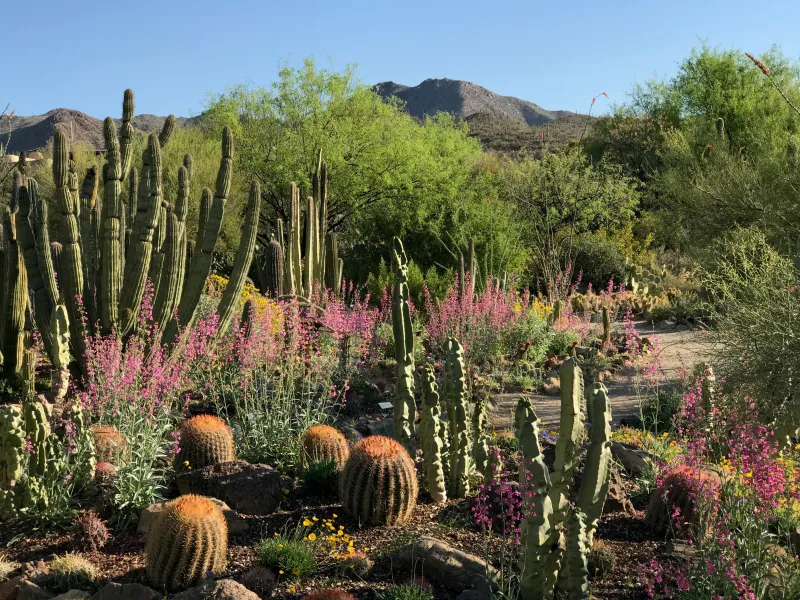
Photo: Indigenous herbalist desert plants Sonoran Arizona community garden, via arcgis.desertmuseum.org
Walk through any stretch of undeveloped desert on Phoenix's edges and you're essentially walking through a pharmacy. Creosote bushes dot the landscape in every direction. Prickly pear pads fan out in brilliant green clusters. Desert lavender hums with bees in the early morning heat. Most people drive past all of it on their way to a Walgreens.
But for a growing community of Indigenous healers, herbalists, and botanists working right here in the Valley, those plants are anything but background scenery. They're medicine. They're memory. And increasingly, they're the center of a quiet cultural revival that's finding its way into Phoenix kitchens, community centers, and wellness spaces.
What the Desert Already Knew
Long before the strip malls and subdivisions, the Sonoran Desert was one of the most biodiverse ecosystems in North America — and the Indigenous peoples who called it home, including the Akimel O'odham (Pima) and Tohono O'odham nations, developed an extraordinarily deep relationship with its plant life over thousands of years.
That relationship wasn't just practical. It was spiritual, ecological, and deeply communal. Plants like saguaro, wolfberry, and cholla weren't just food or medicine — they were woven into ceremony, story, and identity.
"We didn't separate wellness from culture," says one Akimel O'odham herbalist who leads plant walks and workshops out of a community garden in South Phoenix. "The plants, the land, the people — it's all one conversation. What we're doing now is just picking that conversation back up."
For decades, much of that conversation was interrupted — by forced assimilation, the displacement of Native communities, and the broader erasure of Indigenous knowledge systems across the American Southwest. What's happening now in Phoenix feels, to many practitioners, like a reclamation.
Creosote, Prickly Pear, and the Plants You're Probably Ignoring
If you've ever smelled the desert after rain, you've already met creosote. That sharp, resinous scent — somehow ancient and electric at the same time — comes from the creosote bush, or Larrea tridentata, one of the most studied medicinal plants in the Sonoran Desert.
Traditional healers have long used creosote as an antimicrobial and anti-inflammatory agent, applying it topically for skin conditions and brewing it as a tea for respiratory complaints. Modern research has started catching up, with studies examining its antioxidant properties and potential antiviral applications. In Phoenix wellness circles, creosote-infused salves and tinctures have started showing up at local markets and apothecaries — a shift that some practitioners welcome cautiously.
"There's a difference between honoring a plant and commodifying it," notes one Tucson-trained botanist who now runs educational programs through a Valley-based nonprofit. "The goal isn't to turn creosote into the next trendy supplement. The goal is for people to understand why it matters, where it comes from, and how to use it responsibly."
Prickly pear — the spiny cactus that seems to grow absolutely everywhere in Arizona — has perhaps the highest mainstream profile of any desert plant right now. Its magenta fruit has become a staple at Phoenix farmers markets, juiced and syruped into everything from cocktails to lemonade. But traditional uses run far deeper: the pads, or nopales, have long been eaten as a food staple and used to manage blood sugar, a property now supported by clinical research and increasingly relevant given the disproportionate rates of Type 2 diabetes in Indigenous communities across the Southwest.
Desert lavender (Hyptis emoryi), meanwhile, remains more under the radar — a shrubby, silver-leafed plant with small purple flowers that blooms in washes and rocky slopes across the Valley. Herbalists describe it as calming, antimicrobial, and deeply aromatic, with traditional uses ranging from steam inhalations for congestion to ceremonial smudging. It's the kind of plant, practitioners say, that rewards patience and attention — qualities the desert has always asked of the people who live here.
Gardens as Classrooms
One of the most tangible expressions of this revival is happening at ground level — literally. Across Phoenix, community gardens with an Indigenous focus have become some of the most dynamic educational spaces in the city.
In South Mountain Village, a collaborative garden project run by Native community members grows heritage crops alongside medicinal desert plants, hosting regular workshops on plant identification, traditional food preparation, and herbal medicine-making. In the East Valley, a Tohono O'odham-led initiative has partnered with local schools to bring ethnobotany into science curricula, giving kids hands-on experience with plants their grandparents might have grown up knowing intimately.
"Kids come in thinking the desert is just dirt and cactus," says one educator involved in the school program. "By the end, they're telling their parents which plant helps with a stomachache and which one you can eat in a survival situation. That knowledge doesn't go away."
These gardens aren't just teaching botany — they're rebuilding relationships between communities and the land they live on, which in a city as rapidly developed as Phoenix feels quietly radical.
Navigating the Wellness Industry
The mainstreaming of plant-based wellness has been a double-edged development for Indigenous practitioners in the Valley. On one hand, broader cultural interest in herbal medicine has created new audiences and opened doors for Native healers to share their knowledge on their own terms. On the other, the wellness industry has a well-documented habit of extracting Indigenous practices without credit, context, or compensation.
Some Phoenix-based practitioners have responded by being intentional about how and where they share their knowledge. Several offer sliding-scale workshops specifically designed to keep Indigenous and low-income community members at the center. Others have been explicit about what they won't commercialize — certain ceremonial plants and practices that belong to specific cultural contexts and shouldn't be repackaged for a general market.
"I'm happy to teach anyone who wants to learn," says one healer who leads monthly herb walks near South Mountain. "But I ask people to come with respect and humility. This isn't a wellness trend. This is someone's grandmother's knowledge."
A Living Tradition in a Growing City
Phoenix is one of the fastest-growing cities in the country, and with that growth comes constant pressure on the desert landscape that makes this whole conversation possible. Urban sprawl, invasive species, and climate stress are already affecting plant populations that traditional communities have relied on for generations.
That's part of why the urgency behind this revival feels real. Preserving Indigenous plant knowledge isn't just a cultural project — it's an ecological one. Understanding which plants belong here, how they function within desert ecosystems, and how to use them sustainably is knowledge the whole Valley could stand to have.
For now, the movement is growing in the way that desert plants tend to grow: slowly, quietly, and with remarkable resilience. Community by community, workshop by workshop, garden by garden.
The desert has been here a long time. It has a lot left to teach us.