Canals, Community, and Comeback: The Valley Residents Turning Phoenix's Ancient Waterways Into Living Neighborhoods
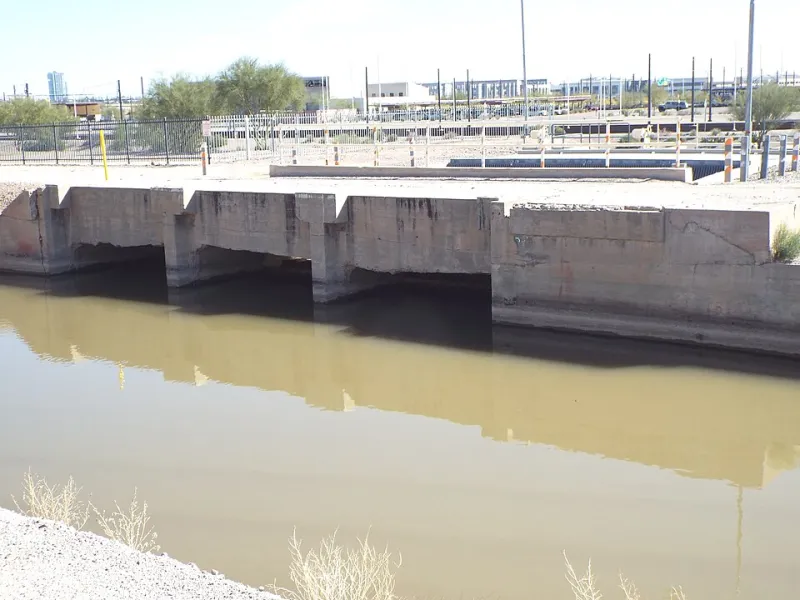
Photo: Marine 69-71, CC BY-SA 4.0, via Wikimedia Commons
You've probably driven over one without realizing it. Maybe you've jogged alongside a concrete channel on a cool January morning, or caught a glimpse of surprisingly green vegetation cutting through a stretch of otherwise beige desert cityscape. Phoenix's canal network — some of it tracing paths first carved by the Hohokam people more than a thousand years ago — is hiding in plain sight. And a quietly passionate group of Phoenicians has decided that's no longer good enough.
They're called, informally, the water whisperers. Engineers who moonlight as historians. Backyard farmers who've turned drip lines into works of art. Community organizers who see a neglected irrigation ditch and imagine a neighborhood park. Together, they're reimagining what it means to live alongside water in one of the driest major cities in the United States.
The Roots Run Deep — Literally
Long before Phoenix was a city, it was a canal system. The Hohokam civilization built an estimated 500 miles of irrigation channels across the Salt River Valley, a feat of engineering so sophisticated that early Anglo settlers essentially followed the same routes when they began farming the region in the 1860s and 70s. The Salt River Project, founded in 1903 following the National Reclamation Act, formalized much of this infrastructure and made large-scale agriculture — and eventually, urban development — possible in the desert.
But as Phoenix sprawled outward and the economy shifted away from farming, many of the smaller lateral canals and distribution lines fell into neglect. Some were paved over. Others became concrete-lined drainage channels, stripped of the vegetation and community life that once surrounded them.
"People think of Phoenix as this car-centric, air-conditioned bubble," says Marcus Delgado, a civil engineer who volunteers with a local water-access advocacy group on weekends. "But the bones of something really beautiful are still there, running underneath everything. You just have to know where to look."
Finding the Green Between the Gray
Delgado is one of several residents who've partnered with neighborhood associations and urban agriculture nonprofits to identify underutilized water access points throughout the city. Using a combination of historical maps, SRP records, and old-fashioned boots-on-the-ground exploration, these volunteer cartographers have been documenting where water rights still exist — and where community members might be able to legally tap into them.
The results have surprised even the most optimistic participants. In South Phoenix, a stretch of irrigation lateral that had been dormant for years is now feeding a half-acre community garden that supplies fresh produce to a predominantly Latino neighborhood with limited grocery access. In Maryvale, a neighborhood group worked with the city to restore a small stretch of canal bank, planting native trees and installing benches to create a shaded walking path where cracked asphalt used to be.
These aren't grand municipal projects with ribbon-cutting ceremonies. They're scrappy, neighbor-driven efforts held together by weekend work parties, donated materials, and an almost stubborn belief that the desert doesn't have to feel hostile.
"People come out and they're shocked," says Yolanda Reyes, who helped organize the South Phoenix garden project. "They'll say, 'I've lived here for 20 years and I didn't know this water was here.' That's the thing — it was always here. We just stopped paying attention to it."
Engineering Meets Imagination
The technical side of this work is more complex than it might look from the outside. Water rights in Arizona are notoriously complicated, governed by a doctrine called "prior appropriation" — essentially, first in time, first in right. Navigating that legal landscape while also working with city permitting, SRP easements, and neighborhood zoning rules requires a kind of hybrid expertise that most residents don't have.
That's where people like Priya Anand come in. A water policy consultant by trade, Anand has been volunteering her expertise to help community groups understand what's actually possible within Phoenix's water infrastructure framework. She describes the city's existing canal network as "an asset that's been chronically undervalued from a community standpoint."
"The engineering is already done," she explains. "The Hohokam did it. The SRP did it. What we're doing now is figuring out how to plug community needs into infrastructure that already exists. It's not as hard as people think, once you understand the rules."
Anand has helped draft water-sharing agreements between urban farms and adjacent neighborhoods, and she's been working with city planners to identify canal-adjacent parcels that could be converted into linear parks — green corridors that would connect existing neighborhoods while providing shade, biodiversity, and stormwater management.
More Than Water
What makes this movement particularly compelling — and very Phoenix — is the way it keeps circling back to community rather than just infrastructure. The canals aren't just delivering water. They're delivering something harder to quantify.
At a community garden near the Grand Canal in central Phoenix, Saturday mornings look like a neighborhood potluck that happens to involve weeding. Families spread out across raised beds, kids dart between rows of chiles and squash, and someone inevitably shows up with a cooler. The garden's informal coordinator, a retired teacher named Bernard Okafor, says the water is almost beside the point.
"The water got us here," he says, gesturing at the drip-irrigated beds surrounding him. "But this" — he waves his hand toward the cluster of people laughing and working nearby — "this is why we stay."
That sentiment echoes across every project in this loose network of water-minded Phoenicians. The canal restoration in Maryvale brought together longtime residents and recent arrivals who'd never had a reason to interact. The South Phoenix garden has become an informal meeting place for neighborhood discussions that have nothing to do with vegetables. Water, it turns out, is a remarkable organizing tool.
What Comes Next
The movement is still small, still largely informal, and still bumping up against the very real constraints of a city not always designed with this kind of grassroots infrastructure reuse in mind. Permitting can be slow. Funding is perpetually uncertain. And the sheer complexity of water law in the American West means that even enthusiastic projects can stall for months over paperwork.
But there are signs that the conversation is starting to shift. The City of Phoenix has been quietly expanding its urban agriculture support programs, and several City Council members have expressed interest in exploring canal-adjacent green space development as part of broader climate resilience planning. The SRP, for its part, has partnered with local organizations on select canal beautification efforts in recent years.
For the people doing the actual work — the weekend warriors with their shovels and their water-rights spreadsheets — the institutional momentum is welcome but not the point. They were doing this before anyone was paying attention, and they'll keep doing it regardless.
"Phoenix has always been a city that figured out how to survive in a hard place," Marcus Delgado says, looking out over a stretch of restored canal bank that, a year ago, was a trash-strewn concrete channel. "That's not new. What's new is that people are starting to remember that surviving together is a lot better than surviving alone."
The water was always here. The community is catching up.