Where the City Never Sleeps: Phoenix's All-Night Haunts and the People Who Call Them Home
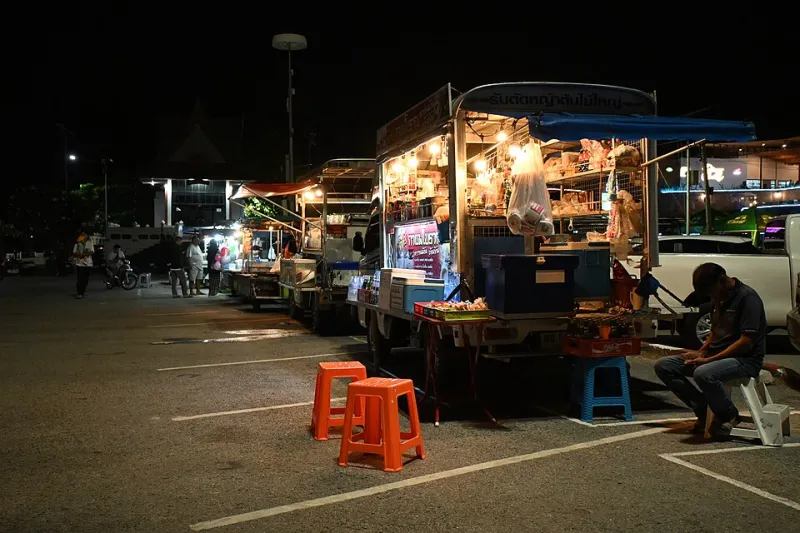
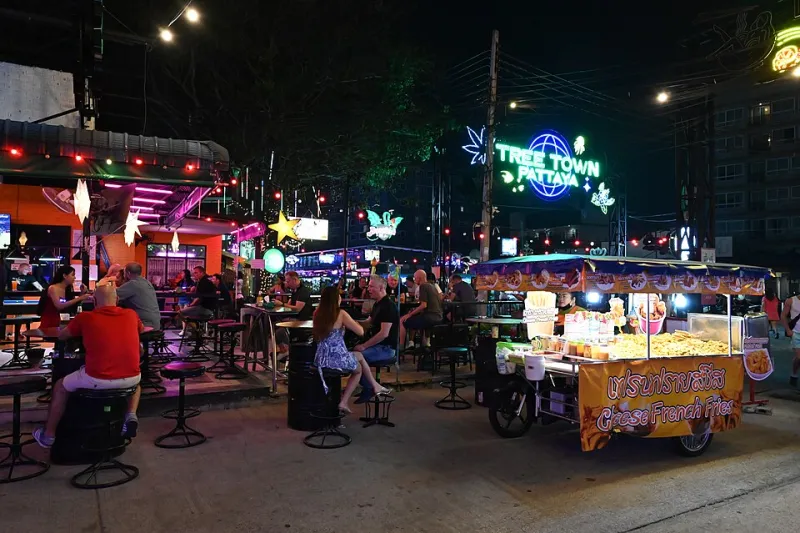
Photo: PattayaPatrol, CC BY-SA 4.0, via Wikimedia Commons
It's 2:47 a.m. on a Tuesday, and the parking lot of a diner off Grand Avenue is fuller than you'd expect. Inside, the booths are a patchwork of humanity: a hospital nurse in scrubs cradling a coffee like it's a life preserver, a pair of art students arguing passionately over a shared plate of hash browns, an older man who seems to know every server by name and probably has for years. The fluorescent light hums. Someone laughs too loud at the counter. It feels, somehow, like community.
Phoenix has a reputation as a city that rolls up its sidewalks early — a sun-baked sprawl that belongs to the daytime. But spend a few nights in the right places and a completely different version of the Valley reveals itself. One that's messier, more honest, and in many ways more interesting than what you see at noon.
The Third Shift Has to Eat Somewhere
Phoenix is a working city, and working cities run around the clock. Hospitals, warehouses, hotels, convenience stores, call centers — tens of thousands of Valley residents punch in when the rest of us are asleep. For these workers, the standard rhythms of social life don't apply. Happy hour is irrelevant when your shift ends at 6 a.m. Brunch is a foreign concept when you're just getting to bed.
That's where places like the all-night spots scattered across Central Phoenix, Mesa, and Glendale quietly step in. They're not glamorous. The menus lean heavily on eggs, pancakes, and coffee refills that never seem to stop coming. But they offer something that's genuinely hard to find at 3 in the morning: a place to just be.
"I've been coming here after my shift at the hospital for probably six years," said one ICU nurse who frequents a diner near the Banner Health corridor. "It started because I needed to decompress before I could sleep. Now I come because there are people here I actually look forward to seeing. It's become part of my routine in a way I didn't expect."
That kind of accidental belonging is exactly what makes these spaces remarkable. Nobody designed them to be community centers. They became that on their own.
More Than a Meal
Talk to the owners and operators of Phoenix's late-night establishments and you start to hear a consistent theme: their regulars aren't just customers. They're something closer to a congregation.
A food truck operator who parks near the warehouse district in South Phoenix most nights of the week describes her spot as "a neighborhood in miniature." Over the past three years, she's watched friendships form, job leads get passed around, and more than a few people find a listening ear on a night when they really needed one. "People come to eat, sure," she says. "But they stay because they feel seen. That means something."
For artists and creatives who keep unconventional hours — which, in Phoenix, is a substantial population — late-night spots function as informal studios and salons. Ideas get workshopped over pie. Collaborations get started over bad coffee. The low-stakes, unhurried atmosphere of a nearly empty diner at midnight is, for many, the ideal creative environment.
One local musician who plays late sets at venues around the Roosevelt Row area says he does some of his best songwriting at an all-night spot on Camelback Road. "There's something about that hour and that vibe. Nobody's performing for anybody. People are just being real. That's where the good material comes from."
A Refuge for the Overlooked
Not everyone who ends up at a 24-hour diner at 4 a.m. is there by choice in the traditional sense. Phoenix, like every major American city, has a significant unhoused population, and many of the Valley's late-night spots have become quiet refuges for people who have nowhere else to go.
The dynamic is complicated, and it plays out differently depending on the establishment. Some owners quietly allow people to nurse a single coffee for hours without pressure. Others have built informal relationships with social service organizations, occasionally connecting regulars in crisis with resources. None of this is formalized or publicized. It just happens, because people are people, and the night shift has a way of dissolving the usual social distances.
"You see the whole city in here at 3 in the morning," said one longtime server at a Phoenix diner who asked not to be named. "The doctor and the person who's been sleeping outside. They're sitting two booths apart. In the daytime, they'd never share a space like this. But at night, something changes."
That leveling effect is one of the most quietly radical things about Phoenix's late-night ecosystem. The usual markers of status and success become a little less legible in the half-light of a diner at midnight. What's left is something more elemental.
The Threat of Disappearing
For all their cultural value, Phoenix's late-night spots are under pressure. Rising commercial rents, shifting development patterns, and the lingering economic bruises of the pandemic years have made it harder to sustain a 24-hour operation. Several well-loved spots have quietly shuttered in recent years, and the ones that remain are often operating on thin margins.
Development along major corridors — including parts of Central Avenue and stretches of the East Valley — has replaced more than a few all-night establishments with the kind of businesses that close at 10. The loss is rarely marked with any ceremony. One day the lights are on. The next, they're not.
For the communities that depended on those spaces, the disappearance can feel disproportionately significant. "When that place closed, I lost my people," said one regular who frequented a now-shuttered diner near Tempe. "I know that sounds dramatic, but that was my community. I haven't really found another one."
Long Live the All-Nighter
There's a reason the late-night diner has been a fixture of American cultural mythology — from Edward Hopper's Nighthawks to every road-trip novel you've ever read. These places tap into something real about how people connect when the usual social scaffolding falls away.
In Phoenix, that mythology isn't just nostalgia. It's alive and unfolding right now, in the booths and parking lots and food truck lines of a city that's still figuring out what it wants to be. The people who gather there after midnight aren't waiting for Phoenix to become something. For them, it already is.
Next time you find yourself awake at an unreasonable hour, consider skipping the delivery app and driving somewhere instead. Order the coffee. Sit for a while. You might be surprised what kind of city shows up to keep you company.