The Chair Shot Heard Around the Cul-de-Sac: Inside the Valley's Backyard Lucha Circuit
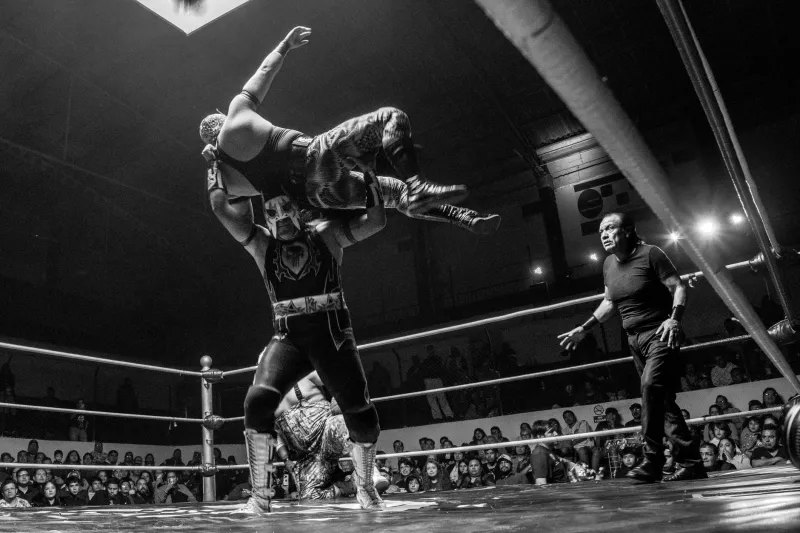
The folding chairs are set up in rows of twelve, which is optimistic, because by bell time people are standing three deep along the back wall.
It's a Tuesday night in Maryvale, inside a community center that usually hosts quinceañera rehearsals and Zumba. The ring is a rented twelve-by-twelve with mats that have seen better decades. A taco truck is doing steady business in the parking lot. The cash box is a shoe box with a slot cut in the lid, and admission is ten dollars, five for kids.
By 7:15, there are about two hundred people in the room, and the front row is almost entirely children who have been promised, repeatedly and loudly, that they will not be pulled into the ring.
It Starts With a Family
The promoter tonight is the third generation of the Cárdenas family, which has been running shows in the Valley since the late 1980s, back when the grandfather worked dates in Sonora and Phoenix in the same month. The operation is small enough that the same person sells tickets, cues the music, and argues with the referee.
“My dad used to say we're not in the wrestling business, we're in the neighborhood business,” says the younger Cárdenas, who handles bookings out of a group chat and a spiral notebook. “The wrestling is what gets everybody in the room.”
That distinction matters. Roughly half the card on any given month is a fundraiser — a youth soccer team raising money for travel, a family with medical bills, a church roof. The promotion takes a cut that barely covers the ring rental and the insurance. The rest goes where it was promised.
The Masks and the People Inside Them
El Pavo Real is 41, fixes air conditioners for a living, and has been wrestling in a peacock mask for eleven years. The mask was sewn by a woman in Glendale who has made roughly four hundred of them and refuses to be photographed.
“The mask is the character,” he says, backstage, which is a hallway with a folding table on it. “You take it off, you're just a guy who fixes AC in July. Nobody pays ten dollars to see that guy.”
He does not break character in the hallway, and he does not break character in the parking lot afterward, where a line of kids wants a photo. He takes every single one.
Most of the performers on the card have day jobs — warehouse, restaurant, school district, one guy who runs a detailing business out of a van. Training happens in a converted garage in west Phoenix with a ring built from used mats and a lot of duct tape. Nobody here is getting rich. A few are getting gas money.
Fifty-Fifty and the Folding Chair Fund
The rituals are consistent enough that regulars can set a watch by them. The 50/50 raffle at intermission. The cooler of aguas frescas by the door, two dollars, honor system. The bin near the entrance where people drop off spare folding chairs, because the promotion owns about sixty and always needs more.
And then there's the heckling, which is constant, affectionate, and entirely in Spanish and English at the same time. A heel taunts the front row. The front row, composed of eight-year-olds and one very serious grandmother, gives it right back.
“She's been coming since 2009,” says a woman near the soundboard, nodding at the grandmother. “She knows everybody. She knows the endings.”
The Paperwork Problem
What looks effortless is, behind the scenes, a mess of logistics. Parking-lot shows — like the ones that pop up in strip-mall lots along Apache Trail in Mesa — require permits, insurance, and conversations with a landlord who has never thought about professional wrestling before. Requirements shift from city to city, and promoters describe the process with the weariness of people who have made a lot of phone calls.
Some shows stay strictly amateur to keep costs down. Others pay for sanctioning and insurance and price the tickets accordingly. Either way, the margins are thin and the paperwork is worse than the wrestling.
Then there are the backyard shows, which are exactly what they sound like: a ring on a trailer, sixty people in a Sunnyslope yard, a neighbor's signed permission, and a hard stop at 10 p.m. Invite-only, word of mouth, over before anyone can file a complaint.
Why It Keeps Selling Out
There's no television deal here, no streaming, no merchandise table with a credit card reader. What there is: a room full of people who live within a few miles of each other, a ten-dollar ticket, and a story with a beginning, a middle, and a chair shot.
After the main event, the ring crew — three teenagers and a man with a knee brace — starts folding chairs while the crowd filters out toward the taco truck. Somebody's uncle is already sweeping.
“You can go to a movie and not talk to anybody,” El Pavo Real says, mask still on, walking toward the parking lot. “Here you sit next to your neighbor and yell at a guy in tights. That's a different thing.”
The next show is posted on flyers at carnicerías and on the promotion's Instagram, which is run by a nineteen-year-old cousin. Bring cash. Bring a chair if you've got one.