Haggling Season: Seven Valley Swap Meets That Tell the Story of Their Neighborhoods
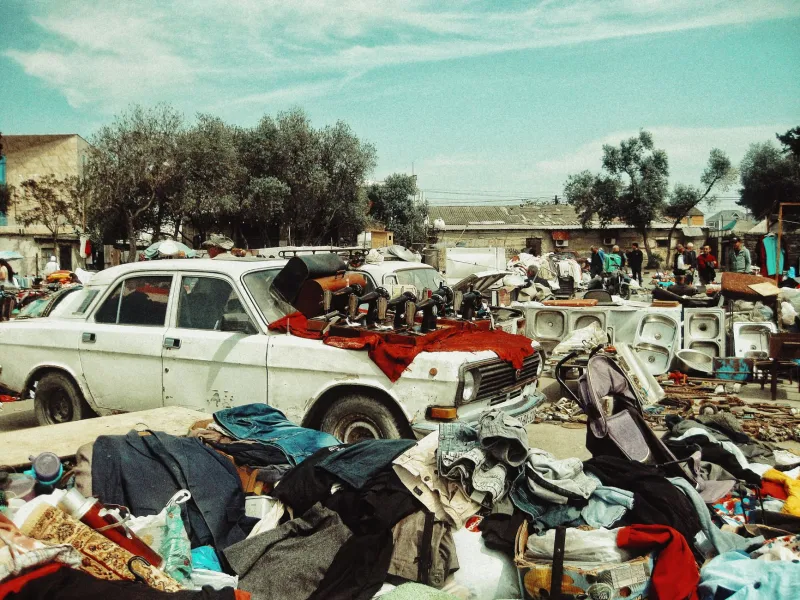
You can learn more about Phoenix in a swap meet aisle than in a year of city council recaps. What people are selling, what they're asking, and what they'll actually take tells you who lives nearby, what they need, and how fast the rents are moving.
Fall is the season for it. The mornings are finally under 70, the lots are packed, and the vendors who disappear in July are back behind their tables with folding chairs and shade structures held down with whatever was in the truck.
Here are seven worth setting an alarm for in 2026.
How to Work a Valley Swap Meet
A few things that apply across the board. Bring cash, and bring small bills — nobody wants to break a hundred at 6:45 a.m. Arrive early for the good stuff, late for the deals; the last hour is a different market entirely. Ask before you photograph a vendor or their table. Bundle items and offer politely; sixty to seventy percent of the asking price is a normal opening, not an insult, but take no for an answer the first time. Bring a tote, a hat, and water. And park where you're told, because lot traffic here is a contact sport.
1. Pulga Alegre — West Phoenix
Sunday, 6 a.m. to 2 p.m., near 75th Avenue and Camelback. Running since 1988, this is the institution the rest of the list gets measured against: used tools, work boots, car stereos, produce by the crate, and a tamale setup that regulars treat as the actual reason they came. Why it matters: this is a working market for working people. Very little here is decorative. How to work it: get there before 8, start at the back rows where the older vendors set up, and don't haggle over a five-dollar item.
2. Sunnyslope Sunrise Swap — North Phoenix
Saturday mornings in a shuttered grocery lot near 7th Street and Dunlap. Smaller, quieter, and closer to an estate sale than a flea market: costume jewelry, hand tools, garden pots, boxes of records nobody has sorted since 1994. Why it matters: Sunnyslope's mix of longtime homeowners and newer arrivals shows up right on the tables — a $4 spatula next to a $200 mid-century lamp. How to work it: talk to people. This is the chattiest market on the list, and the good stuff comes out after ten minutes of conversation.
3. The Dust-Up at the Old Drive-In — Glendale
First Saturday of the month in a former drive-in lot off Glendale Avenue. Car parts, truck stuff, chrome, and a rotating cast of lowriders parked in the front row because the owners know an audience when they see one. Why it matters: the West Valley's car culture is one of the most underrated parts of Phoenix identity, and this is where it gets traded. How to work it: bring a mechanic friend or at least a flashlight. Prices here are confident.
4. Apache Trail Vintage Row — Mesa
Second Sunday, monthly, in a strip-mall lot along Apache Trail. Vintage denim, band tees, mid-century housewares, a DJ, and cold brew from a cart. Younger crowd, higher prices, better lighting. Why it matters: this is what a neighborhood looks like mid-transition — the vendors are mostly in their twenties and thirties, and half of them live within a mile. How to work it: know your measurements before you go. Nobody here is holding a fitting room.
5. Canal Side Plant Swap — Tempe
A newer pop-up that sets up near the Grand Canal on select Saturday mornings. Cuttings, ceramics, potted desert natives, and a strict no-purchase-necessary trading culture. Why it matters: the Valley's plant obsession has quietly become a barter economy, and this is its trading floor — saguaro seedlings next to monstera cuttings next to somebody's grandmother's aloe. How to work it: bring something to trade, even if it's just extra pots. Cash works, but trading is the point.
6. Warehouse Remix — South Phoenix
Second Sunday near 27th Avenue and Buckeye, in and around an industrial yard. Furniture flips, bikes, framed art, toolboxes, food trucks idling at the edge. Rough-edged and genuinely unpredictable; some months it's a bust, some months you find a $30 dresser that changes your apartment. Why it matters: south Phoenix's maker and repair economy runs through lots like this one. How to work it: bring a vehicle you don't mind dirtying and a friend who can help lift. Arrive at opening; the furniture goes first.
7. Chandler Book and Record Bazaar — East Valley
A church parking lot on a Saturday morning, once a month. Paperbacks by the box, vinyl priced by a guy who actually knows what he has, comics, magazines, and a table of cookbooks that never sells out. Why it matters: the East Valley's quieter market culture is real, and it's mostly made of paper. How to work it: ask the record guy what he's been listening to. He will tell you, at length, and it's worth it.
What the Aisles Are Telling You
The long-running west-side markets are still the cheapest places in the metro to buy a real tool or a real meal. The new pop-ups are younger, prettier, and more expensive — and they tend to appear wherever rents are starting to move. Watch where a market opens, and you're watching a neighborhood announce itself.
Go early. Bring cash. Leave the lot a little cleaner than you found it, and you'll get treated like a regular by your second visit.