Low Water, High Ollies: How Phoenix Skaters Are Claiming the City's Concrete Spillways
The alarm goes off at 5:15. By 6:40 the concrete is loud.
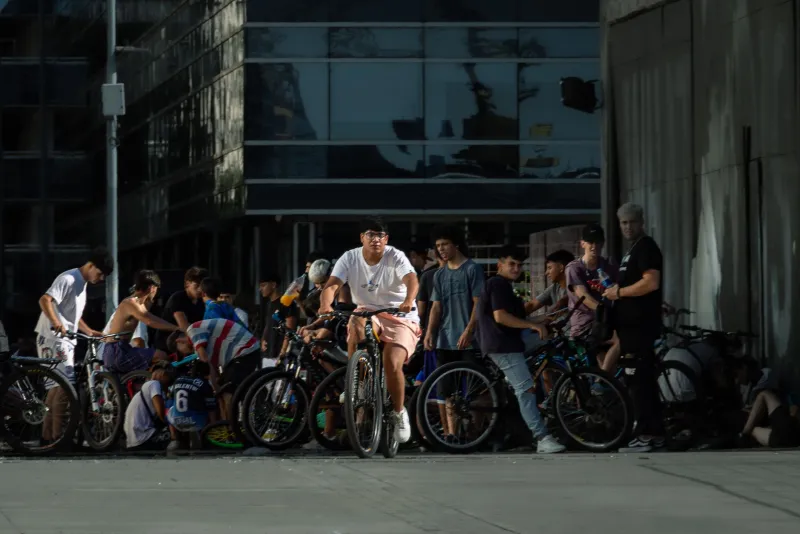
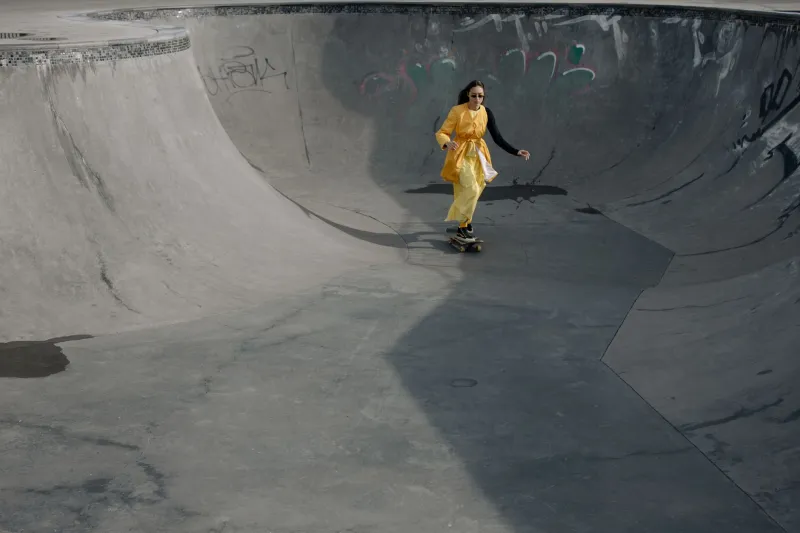
On a Saturday morning in early November, a drainage channel just north of Thunderbird Road is doing two jobs at once. Water — when there is any — moves east toward the canal system. Everything else moves through a loose rotation of skaters: a couple of teenagers warming up on the flat, two guys in their thirties dragging a plywood kicker out of a pickup bed, a kid in a Cardinals hoodie learning to push without eating it.
The temperature is 68 degrees and rising. In July, this same session would have started at 5 a.m. and ended by 7:30. Phoenix skaters don't talk about the heat much. They just schedule around it.
The Pour
Every few months, word goes out that a crew is doing a pour. Fifteen or so people show up with bags of Quikrete from the hardware store on 35th Avenue, angle iron scrounged from a scrap yard off Buckeye, a wheelbarrow, and a generator. By the end of the afternoon there's a new quarterpipe against one bank or a ledge running along the other.
The design philosophy is strangely conservative. Nothing is meant to last.
“If it's permanent, it's a problem,” says Marcus, 24, who has been skating this stretch since he was eleven and asked that his last name stay out of print. “If it's gone by Monday, it's a puddle. A puddle isn't anybody's business.”
That's the whole theory in one sentence. The obstacle is temporary, the cleanup is fast, and the concrete underneath belongs to a flood control system that was never designed with skateboards in mind — but also wasn't designed to be interesting, and somehow is.
Rules, Written and Otherwise
Technically, modifying public drainage infrastructure is a code violation, and there are signs at plenty of channel entrances that say so. In practice, enforcement tends to be complaint-driven. A neighbor calls about noise before 7 a.m., or a truck idling in front of a driveway, or somebody's music.
So the crews have developed an etiquette that is half neighborhood politeness and half camouflage. No skating before 7. No speakers before 8. Sweep the flat when you leave. Pack out everything, including the stuff that isn't yours. And if a tag shows up on the wall, somebody paints over it, because graffiti gets a city response faster than anything else that happens down here.
“We clean more than we skate,” says Dana, 19, who brings a push broom in her trunk. “People think it's all chaos. It's the most organized thing I do all week.”
An Unwritten Curriculum
On the first Saturday of the month, a volunteer named Ky runs a free clinic from 8 to 9:30 for anyone under 14. Helmets required, pads strongly encouraged, and one condition: you help pick up trash before you ride.
Ky is 34 and works as a social worker during the week. He keeps a stack of spare decks in his garage for kids who show up three weekends in a row in school shoes.
“Somebody handed me a board when I was twelve,” he says. “That's the whole program.”
What gets passed down isn't just kickflips. Kids learn to mix concrete, read the weather radar, patch a crack before it becomes a problem, and negotiate with a guy in a warehouse office who wants to know why there are sixteen teenagers behind his building.
The Safety Conversation
Nobody involved in this is going to pretend the channels are safe, because they aren't. These are flood infrastructure. During monsoon season, a storm twenty miles north can send water through a channel with almost no warning, and the rule among the regulars is absolute: if there's rain in the forecast upstream, you're not down here.
There's also no insurance, no signage, and no one to call if something goes wrong. A nurse practitioner who skates the same channel shows up once a month with a first aid kit and a lot of opinions about wrist guards.
And the alternative isn't exactly a gold-plated option. The nearest indoor park is a $20 drop-in and a two-bus ride for a lot of these kids. That math is why the channels stay busy.
The Long Game
A year and a half ago, a crew that had been cleaning up a dead-end slab behind a warehouse near 27th Avenue finally got a yes. The property manager handed them a key to the gate and a request: keep it quiet, keep it clean, and tell us if anything breaks.
That's the model some organizers are now pushing — adopt-a-slab. A group in Mesa has been talking with a council office about a pilot. Nobody in these conversations is asking for a two-million-dollar destination skatepark. They're asking for the part of the city that already exists, is already concrete, and is currently just sitting there.
Until then, there's a pour scheduled for a Sunday in December. Bring gloves. Bring water. Leave by noon.
And if you see a guy with a push broom, say thanks. He's the reason nobody's called the city yet.