Cracked Concrete, Big Dreams: The Phoenicians Reinventing Their Neighborhoods From the Ground Up
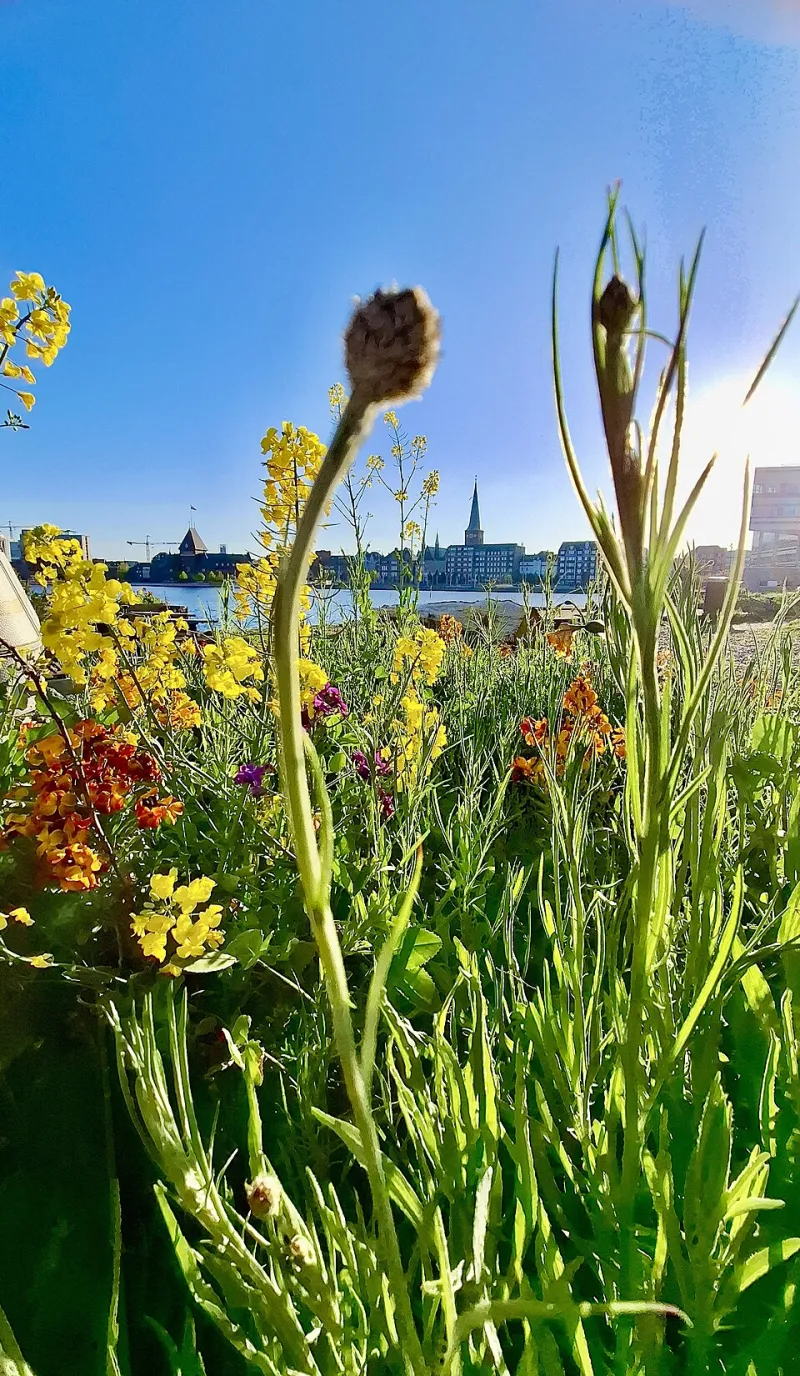
Photo: Ciara Ní Riain, CC BY-SA 4.0, via Wikimedia Commons
There's a corner lot near 35th Avenue and McDowell that used to collect shopping carts, sun-bleached mattresses, and the occasional couch nobody wanted anymore. Today, it has a hand-built pergola, three raised garden beds, two picnic tables made from reclaimed lumber, and a rotating cast of neighbors who stop by after work just to sit somewhere that doesn't feel like a parking lot.
Nobody got a grant to build it. Nobody hired a landscape architect. A handful of residents just decided the lot was more useful as a gathering place than a dumping ground, cleared it out over two weekends, and started building.
"We asked the city what the process was to do something official with the space," says Ramona, one of the residents who spearheaded the effort. "They gave us a list of departments to contact that was genuinely longer than my arm. So we just... did it ourselves and figured we'd deal with the paperwork later."
This is Phoenix now — or at least a version of Phoenix that doesn't always make the press releases. In the Valley's older, denser neighborhoods, the ones that got left behind when development dollars chased the suburban fringe, a generation of residents is quietly rewriting the rules of how a neighborhood gets shaped.
The Strip Mall Problem Nobody Wants to Solve
Phoenix has more aging strip malls per capita than almost any other major American city. Built fast during mid-century expansion booms, many of these commercial corridors are now half-empty at best — a nail salon, a tax prep office, a shuttered mattress store — surrounded by crumbling asphalt and broken signage.
For most developers, these properties are a headache. For some Phoenicians, they're an opportunity.
In the South Mountain area, a collective of neighbors and small-business owners spent the better part of two years convincing a strip mall landlord to let them transform an empty anchor unit into a shared commercial kitchen. The space, which they call La Cocina Común, now hosts pop-up food vendors, cooking classes, and weekend tamale operations that feed the block and generate income for local cooks who couldn't otherwise afford commercial prep space.
"There was no model for this when we started," says Delia, one of the collective's founding members. "We were basically making it up as we went. But the need was so obvious. People in this neighborhood have skills and recipes and whole food businesses just waiting to happen — they just don't have a legal kitchen to work out of."
La Cocina Común now has a waiting list for monthly memberships. The landlord, initially skeptical, recently renewed the lease at a reduced rate after watching foot traffic to adjacent businesses increase.
Pocket Parks and the Politics of Empty Space
Ask anyone in urban planning circles about Phoenix and "green space" in the same sentence and you'll get a long pause. The Valley's older residential grids weren't exactly designed with contemplative park benches in mind. But residents across neighborhoods like Maryvale, Garfield, and Central City are carving out their own versions of breathing room — sometimes with permission, sometimes without, and sometimes somewhere in the complicated middle.
The pocket park movement here looks different than it does in, say, Portland or Denver. It's scrappier. A strip of city-owned right-of-way gets a few shade trees and a painted mural. An abandoned corner gets cleared and seeded with native desert plants. A church parking lot becomes a Saturday farmers market that quietly morphs into a weekly neighborhood hangout.
Marco, a landscape contractor who lives in Garfield, has helped build four informal pocket parks in the past three years, all on lots where he tracked down absentee owners and negotiated informal use agreements.
"I tell them, look — your lot is currently an eyesore and a liability," he says. "Let us take care of it for free, and it becomes something the neighborhood actually appreciates. Nobody's broken into a space that people are actively using and caring for."
His success rate with landlords? About sixty percent. The other forty percent, he says, just never called him back — which he takes as a tacit "go ahead."
Adaptive Reuse, Neighborhood Style
The term "adaptive reuse" usually conjures images of high-end loft conversions and boutique hotel renovations. In Phoenix's working-class neighborhoods, it looks a lot more practical — and a lot more interesting.
A former auto repair shop in the Willo-adjacent corridor has been transformed by a loose coalition of artists and neighbors into a multi-use community space that functions as a gallery on first Fridays, a tool library on weekends, and an informal meeting hall whenever the neighborhood association needs a place to gather. The oil-stained concrete floor is still there. So are the original hydraulic lifts, now used as display pedestals.
"We didn't want to erase what the building was," says Tomás, one of the artists involved in the conversion. "This was a working-class neighborhood space. It should still feel like that."
The tool library component — a lending program where neighbors can borrow drills, saws, levels, and other equipment for free — has become the unexpected star of the operation. More than 200 households have registered, and the waiting list for certain power tools regularly stretches into the following weekend.
Why This Matters Beyond the Feel-Good Story
It would be easy to frame all of this as a collection of charming community projects — nice human interest material, easy to celebrate and just as easy to forget. But what's happening in these neighborhoods is actually a serious challenge to the dominant model of how Phoenix grows.
For decades, the Valley's development logic has been essentially centrifugal: build outward, build new, and let the older core absorb whatever neglect the market decides it deserves. Residents in those older neighborhoods have largely been treated as passive recipients of whatever decisions get made above their pay grade.
What the pocket park builders, the communal kitchen organizers, and the adaptive reuse coalitions are doing is asserting a different logic — one that says the existing city is worth investing in, that neighborhoods have design intelligence already embedded in them, and that the people who actually live somewhere might have better ideas about what it needs than a consultant hired from out of state.
"We're not anti-development," Ramona is careful to say. "We're just pro-us. Pro-this neighborhood. Pro-the people who are already here."
The pergola on 35th and McDowell is still standing. Last week, someone added a little free library box to one of the posts. Nobody knows who did it. Nobody needed to.
That's kind of the whole point.