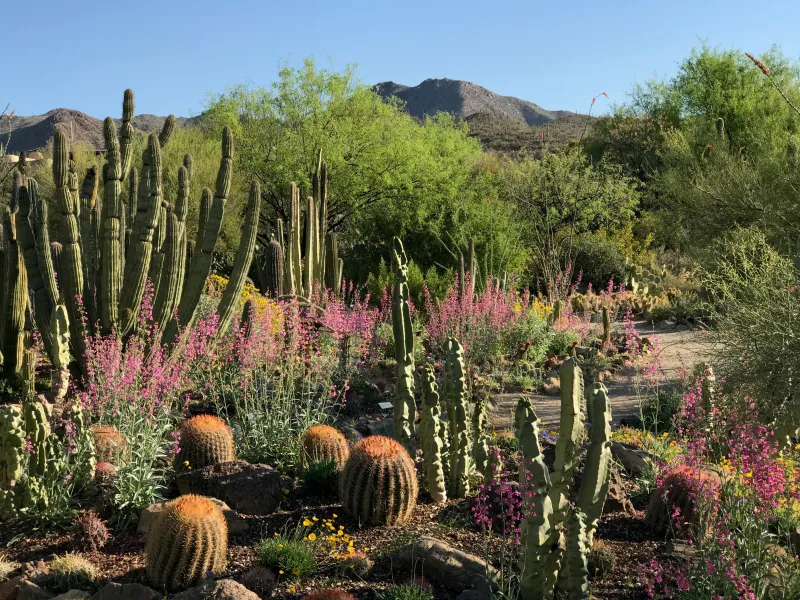
After Dark in the Garden: Meet the Phoenix Plant Lovers Who Only Come Alive at Night
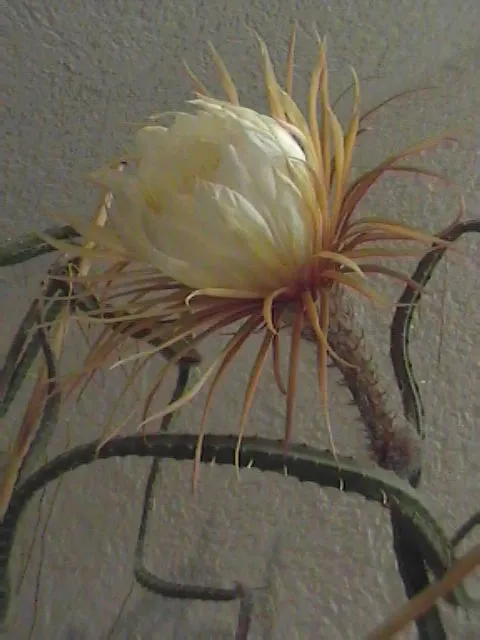
Photo: Unknown, CC BY-SA 3.0, via Wikimedia Commons
It's 11:30 p.m. on a Thursday in July, and Marisol Vega is standing barefoot in her Maryvale backyard, flashlight in hand, watching a flower open in real time. The bloom — a Queen of the Night cactus, technically Epiphyllum oxypetalum — has been building to this moment for nearly a year. It will last maybe six hours before wilting forever at dawn. Marisol has set an alarm for this. She has canceled plans for this. She has absolutely no regrets.
"People think I'm weird," she says, laughing. "But then I show them a photo and they're like, 'Wait, that grew here?' Yeah. In my backyard. At midnight."
Marisol is part of a loosely organized but deeply passionate community of Phoenix-area gardeners who have oriented their entire horticultural lives around the night. They grow plants that bloom after dark, they water and tend and propagate after sunset, and they share cuttings and seeds through an informal network that operates mostly through word of mouth, group chats, and the occasional pop-up swap in someone's driveway. It's not a club exactly — there are no dues, no bylaws, no official name. But it's real, it's growing, and it's one of the more quietly radical things happening in the Valley right now.
Why the Desert Dark Makes Perfect Sense
To understand why someone would choose to garden at midnight, you have to understand what Phoenix summers actually feel like at 2 p.m. Soil temperatures can exceed 140 degrees. Ground-level heat radiates off concrete like an open oven. Even established desert plants go dormant or struggle under that kind of assault, and any gardener who's tried to work outside between Memorial Day and late September knows the particular misery of kneeling in full sun when it's 112 in the shade.
Night gardening isn't just a quirky lifestyle choice here — it's a rational adaptation. After 9 or 10 p.m., temperatures in the Valley can drop 20 to 30 degrees, the air softens, and the whole sensory experience of being outside transforms. For plants, the cooler soil temperatures mean less transplant shock, better water absorption, and reduced evaporation. For gardeners, it means they can actually think straight.
"I started doing everything at night just out of necessity," says Terrence Okafor, who tends a sprawling collection of night-blooming cereus varieties in his Tempe backyard. "But then I started noticing that some of these plants were doing things I'd never seen during the day. Moonflowers. Cereus. Four o'clocks. The night has its own whole ecosystem."
Terrence is one of the more connected nodes in the informal network. He estimates he's traded specimens with over 40 people across the Valley in the last three years — sometimes by leaving a labeled cutting on someone's porch, sometimes by hosting small late-night "bloom watches" when something spectacular is about to open.
The Plants That Started It All
Ask any member of this community what first pulled them into night-blooming horticulture and the answer is almost always the same: the Queen of the Night.
The Epiphyllum oxypetalum is a cactus native to Mexico and Central America that produces enormous, intensely fragrant white flowers — sometimes eight inches across — that open only after dark and are completely gone by morning. It blooms rarely, sometimes just once or twice a year, and the event has an almost ceremonial quality that tends to convert casual observers into lifelong enthusiasts.
"It's the gateway plant," says Ana Whitehorse, who runs a small native plant nursery in South Phoenix and has quietly become one of the community's most trusted sources for rare specimens. "Once people see a Queen of the Night open, they want more. Then they find out about moonflowers, about night-blooming jasmine, about all the cereus varieties. And then they're in."
Beyond the showstoppers, the community cultivates a surprisingly diverse range of species. Sacred datura (Datura wrightii), a dramatic native wildflower with trumpet-shaped white blooms, is a favorite for its deep connection to Sonoran Desert ecology and its role as a pollinator plant for the white-lined sphinx moth. Night-blooming water lilies, evening primrose, and several varieties of Hylocereus — the genus that includes dragon fruit — also circulate through the network regularly.
Swaps, Secrets, and Solidarity
The exchange of plants is where the community gets interesting. Without a formal structure, the network runs on trust, generosity, and a shared understanding that rare specimens are meant to be propagated and passed on, not hoarded.
Most swaps happen through group chats — there are at least three active ones that members reference, with overlapping membership and different vibes. Some are more focused on ID help and growing tips; others are primarily logistics for trades and giveaways. Occasionally someone will post that they have extra cuttings of something special, and within hours a pickup is arranged, usually late in the evening.
"Nobody's charging for anything," Marisol says. "It's not about money. It's about getting these plants into more yards, more neighborhoods. Especially in areas where people don't have access to good nurseries."
That last point matters in Phoenix, where access to specialty plants is unevenly distributed across the metro. The big-box garden centers in wealthier suburbs stock a predictable rotation of drought-tolerant landscaping staples. In neighborhoods like Maryvale, Laveen, or parts of South Phoenix, options are limited. The informal network fills that gap in a way that no retail business currently does.
A Different Kind of Garden Culture
There's something quietly countercultural about all of this that the participants seem aware of, even if they don't make a big deal out of it. Mainstream gardening culture — the kind you see in magazines and on home improvement shows — is built around daytime visibility. A beautiful garden is one that looks great in afternoon light, one that neighbors can admire from the street, one that photographs well for social media.
Night gardening inverts all of that. The audience is smaller, the hours are antisocial, and the most spectacular moments happen when nobody's watching. There's something almost meditative about it, a practice oriented toward the experience rather than the display.
"My neighbors have no idea what's happening back here," Terrence says, gesturing at a tangle of cereus vines climbing a wooden trellis. "During the day it just looks like a bunch of green stuff. But at night? It's completely different."
For Ana, the connection to the desert itself is what keeps her going. "These plants evolved to bloom at night because that's when their pollinators are active — moths, bats, certain beetles. They're not performing for us. We're just lucky enough to be awake to see it."
If you want in, the community isn't hard to find — but you do have to look. Ask around at local plant swaps, check the comment sections of Arizona gardening forums, or just post in a neighborhood group that you're curious about night-blooming plants. Chances are, someone will reach out.
Just be ready to be up late.