The Valley on the Line: Meet the Scientists and Neighbors Racing to Save Phoenix's Water Future
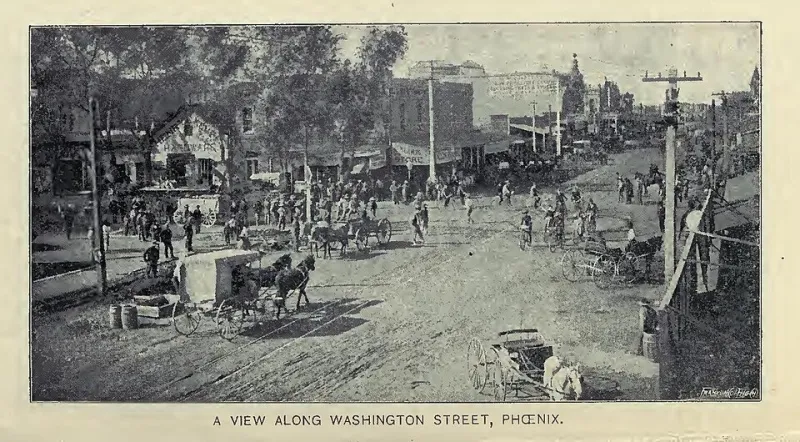
Photo: Unknown, Public domain, via Wikimedia Commons
There's a moment, usually somewhere around July, when Phoenix stops feeling like a city and starts feeling like a dare. The pavement radiates heat long after midnight. The Salt River runs low. And somewhere in a university lab or a community garden in South Phoenix, someone is staring at a spreadsheet or a soil sample, quietly calculating how much time we have left.
Not to be dramatic about it. But the people working on Phoenix's water and climate future will tell you — off the record, over coffee, with the kind of tired honesty that comes from years in the field — that the timeline is tighter than most residents want to believe.
The good news? They're not waiting around for anyone to believe them. They're already building the city Phoenix needs to become.
The Numbers Don't Lie, But They Don't Have to Be a Death Sentence
Arizona has been drawing down its Colorado River allocation for decades, and the river itself has been shrinking. Lake Mead hit historic lows in 2022. Groundwater aquifers across the Valley are being pumped faster than they're naturally replenished. The math, as one hydrologist at Arizona State University put it, "doesn't balance."
But math can be rewritten — or at least, revised — if you're willing to put in the work.
That's the operating philosophy behind the Arizona Water Innovation Initiative, a coalition of researchers pushing hard on aquifer storage and recovery programs. The idea is straightforward in concept, complicated in execution: when water is available — from monsoon runoff, treated wastewater, or surplus Colorado River deliveries — you push it underground into natural aquifer systems. Then you pull it back out during drought years. Phoenix has been doing a version of this since the 1990s, but the scale and sophistication of current projects is something else entirely.
"We're essentially banking water the way you'd bank money," explained one engineer working with the Salt River Project. "Except the interest rate depends on how well we manage infiltration basins, soil permeability, and recharge timing. It's not glamorous. It's hydrology."
It's also, increasingly, a lifeline.
Growing Food in the Wrong Place at the Wrong Time — On Purpose
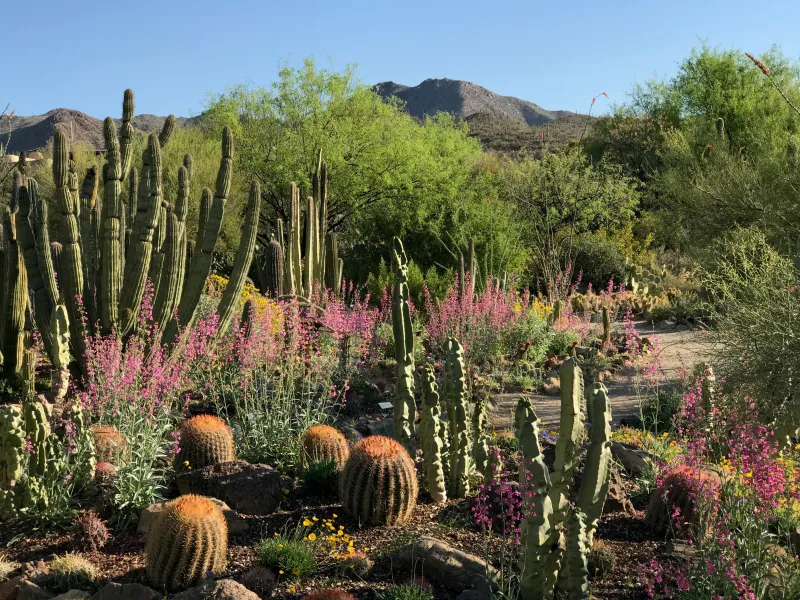
Drive through certain neighborhoods in the East Valley and you'll spot them: community plots thick with tepary beans, desert-adapted squash, and native chiles baking happily in full sun. These aren't novelty gardens. They're proof-of-concept operations run by urban agriculture advocates who are quietly rewriting what it means to grow food in a desert city.
Organizations like Desert Harvesters and the Spaces of Opportunity program have been championing drought-resistant crops and rainwater harvesting techniques for years, often working directly with residents who don't have a lot of time or money to spare. The pitch isn't ideological — it's practical. Native and heritage crops require a fraction of the water that conventional produce needs. They're adapted to this climate. They've been growing here, in some cases, for thousands of years.
"We talk a lot about innovation, but sometimes innovation means looking backward," said one community organizer who works with Indigenous food sovereignty groups in the Valley. "The O'odham people were farming in this desert long before Phoenix existed. Their seed knowledge is climate adaptation."
That intersection of traditional ecological knowledge and modern agricultural science is showing up in some unexpected places — university extension programs, school garden curricula, and neighborhood association meetings where residents are learning to swap ornamental grass for edible native plants.
The Shade Equation
One of the less-discussed dimensions of Phoenix's climate challenge is the urban heat island effect — the way dense development, dark pavement, and a shortage of tree canopy can make city temperatures run 10 to 15 degrees hotter than surrounding desert areas. For low-income neighborhoods that often have less green infrastructure, this isn't just uncomfortable. It's a public health emergency.
The city's Urban Heat Island Initiative has been working to address this through tree-planting programs, cool pavement pilots, and community cooling center networks. But advocates say the pace needs to accelerate. A lot.
"We plant trees in wealthy neighborhoods faster than we plant them in lower-income ones," said one activist with a Valley environmental justice group. "That's not a neutral outcome. That's a policy choice, and it can be a different policy choice."
Grassroots groups have taken matters into their own hands in some areas, organizing neighborhood shade-mapping projects that identify the most heat-vulnerable blocks and prioritizing them for volunteer tree-planting days. It's slow work. A newly planted mesquite takes years to provide meaningful shade. But the people doing this planting aren't thinking about next summer. They're thinking about 2045.
Recruiting the Valley into the Fight
Perhaps the most interesting shift happening in Phoenix's climate adaptation world is the move toward what researchers are calling "civic science" — the deliberate recruitment of ordinary residents into data collection, monitoring, and implementation efforts.
The Maricopa Association of Governments has piloted programs that train community members to monitor stormwater runoff in their neighborhoods. ASU's urban climate research teams have experimented with distributed temperature sensor networks that rely on resident participation. And water conservation educators are showing up at neighborhood association meetings, farmers markets, and community centers with low-tech, high-impact strategies that anyone with a yard or a balcony can implement.
The underlying theory is that Phoenix's survival isn't going to be engineered from the top down alone. It's going to require buy-in from the 1.6 million people who live here and the millions more likely to arrive over the next few decades.
"You can't build aquifer recharge basins fast enough to outrun population growth if nobody changes their behavior," said one water policy researcher. "You need both. The infrastructure and the culture shift."
That culture shift is, slowly, happening. Water use per capita in Phoenix has actually dropped significantly over the past 30 years, even as the population has grown. Xeriscaping has moved from a fringe concept to a mainstream landscaping choice. Reclaimed water systems are expanding across the metro area.
None of it is enough yet. Everyone working in this space will tell you that. But the coalition growing around Phoenix's water future — scientists, engineers, farmers, activists, neighborhood volunteers — is bigger and more creative than it's ever been.
What Comes Next
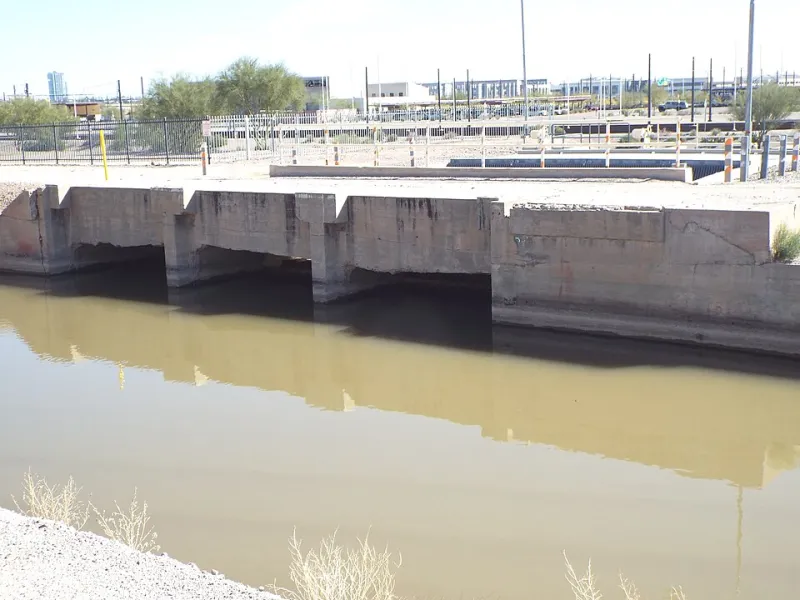
Phoenix has always been a city that bet on itself when the odds looked bad. Built on desert land that most people thought couldn't support a major population center, it grew anyway — sometimes recklessly, but also with genuine ingenuity. The canal system that made the Valley livable was an engineering feat. So were the dams. So was the air conditioning that made summer survivable.
The next chapter of that story is being written right now, in labs and community gardens and city council chambers and backyard rain barrels. It's being written by people who love this place enough to fight for its future, even when the forecast looks grim.
The desert has always demanded adaptation. Phoenix, it turns out, might be pretty good at it.