Dirt Under Their Nails: The Valley Neighbors Quietly Rewilding Phoenix One Seed at a Time
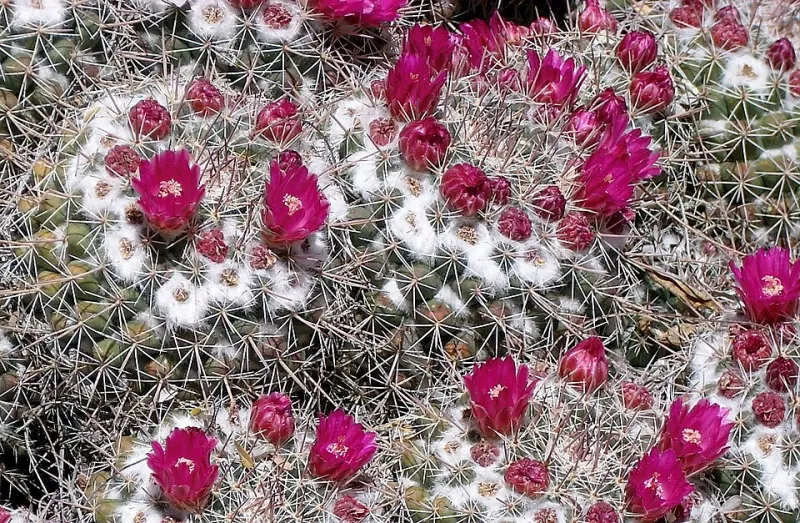
Photo: Fccardiff, CC BY 3.0, via Wikimedia Commons
Somewhere in South Phoenix, there's a front yard that looks nothing like its neighbors. No gravel. No saguaro-in-a-pot. No turf that's been spray-painted green to fool HOA inspectors. Instead, there's a riot of desert marigold, brittlebush, and globe mallow spilling over a low wall, buzzing with native bees that most people in the Valley have never seen before. The person who planted it didn't read about it in a landscaping magazine. They got the seeds from a neighbor, who got them from a swap at a local library, who grew them from a packet passed along at a community garden on the west side.
That's kind of how this whole thing works.
Phoenix has a complicated relationship with its own desert. The city was essentially built in opposition to it — all that concrete, all those imported palm trees, all those lawns that drink water like they're training for a marathon. But lately, something's shifting. A growing, informal network of gardeners, ecologists, and plain old curious residents is pushing back, one backyard at a time, using something as simple and ancient as a seed.
The Swap Meet, But Make It Botanical
Seed swaps have been around forever — farmers have traded seeds across fences and at markets for as long as agriculture has existed. But what's happening in the Valley right now feels like something a little different. It's less about food production (though that's part of it) and more about ecological restoration dressed up in neighborhood-friendly packaging.
These gatherings pop up at community centers, local nurseries, and library branches across the metro. People show up with envelopes and paper bags stuffed with seeds harvested from their own yards — penstemon, desert willow, sacred datura, fairy duster — and leave with something new to try. There's usually someone who knows way too much about soil composition, someone who's just getting started and is a little overwhelmed, and at least one person who drove forty minutes because they heard there might be ironwood seeds available.
What makes these exchanges stick isn't just the plants. It's the knowledge that travels with them. Which seed needs cold stratification. Which one needs fire to germinate. Which plant the local Tohono O'odham communities have used for generations and why that history matters. You can't get that from a QR code on a nursery tag.
Vacant Lots as Unlikely Sanctuaries
Not all of this is happening in private yards. Some of the Valley's most interesting rewilding projects are taking root in spaces that most people would walk past without a second glance — empty lots, neglected medians, the forgotten strip of dirt between a chain-link fence and an alley.
In neighborhoods where green space is scarce and the heat island effect hits hardest, these patches of reclaimed land carry real weight. A quarter-acre of native plantings doesn't just look better than a gravel wasteland — it lowers the ambient temperature, filters stormwater runoff, and creates corridors for pollinators trying to navigate an increasingly fragmented urban landscape.
Phoenix has one of the highest rates of bee species diversity in the entire country — over a thousand native species, many of which are quietly disappearing as their habitat gets paved over. The people planting brittlebush on abandoned lots aren't just making the neighborhood prettier. They're running an informal rescue operation.
Water Is the Whole Conversation
You can't talk about gardening in Phoenix without talking about water. The city sits in one of the driest regions in North America, drawing from a Colorado River that's been in crisis for years. Every lawn, every ornamental fountain, every non-native tree that needs irrigation is part of a calculation that's getting harder to ignore.
Native plants flip that calculation. Most desert-adapted species, once established, need little to no supplemental irrigation. They've spent thousands of years figuring out how to survive on what falls from the sky here — which, in Phoenix, isn't much. Planting them isn't just an aesthetic choice. For a lot of the people in these seed networks, it's a quiet form of political action.
Some participants have gone further, pairing their native plantings with rainwater harvesting systems — earthworks, berms, and swales that slow and sink rainfall into the ground rather than letting it rush off into the storm drain. It's a technique with deep roots in Indigenous land management, and it's being rediscovered by a new generation of Phoenix residents who are tired of watching the desert get treated like a problem to be solved rather than a system to be understood.
Food Sovereignty in the Desert
For some members of these networks, the seeds aren't just ecological — they're cultural. Phoenix is home to a massive and diverse population, and a lot of those communities have food traditions that trace back to landscapes very different from the Sonoran Desert. But there's also a growing interest in the food plants that have sustained people in this specific place for centuries.
Cholla buds. Mesquite pods. Saguaro fruit. Wolfberry. These aren't novelty ingredients — they're the foundation of a food system that existed here long before the first canal was dug or the first orange grove was planted. Seed networks that include these plants are doing something beyond gardening. They're preserving a culinary and ecological heritage that's easy to lose track of when the nearest Sprouts is three miles away.
Some participants work directly with Indigenous community members and organizations to make sure that knowledge is shared respectfully and that the communities who stewarded these plants for generations are centered in the conversation — not just as historical footnotes, but as active participants in what comes next.
Growing Something Bigger
None of this is organized in any formal sense. There's no nonprofit with a strategic plan, no city contract, no branded initiative. It's just people who got interested, then got connected, then got their hands dirty. The network grows the way the plants do — opportunistically, through cracks in the pavement, wherever conditions are right.
But the cumulative effect is starting to show. Drive through certain Phoenix neighborhoods and you'll notice yards that look different than they did five years ago. Less rock, more texture. More color in the fall and spring. More movement — birds, bees, the occasional coyote cutting through what used to be a bare lot.
The Valley has always been a place that reinvents itself, sometimes brutally, sometimes beautifully. What these backyard botanists are doing is a quieter kind of reinvention — one that asks what Phoenix could look like if it worked with the desert instead of against it. The answer, it turns out, is pretty remarkable. And it starts with a seed in a paper envelope, passed from one neighbor to another.