Scrap, Solder, Repeat: Inside Phoenix's Thriving Culture of Makers Who Build With What's Left Behind
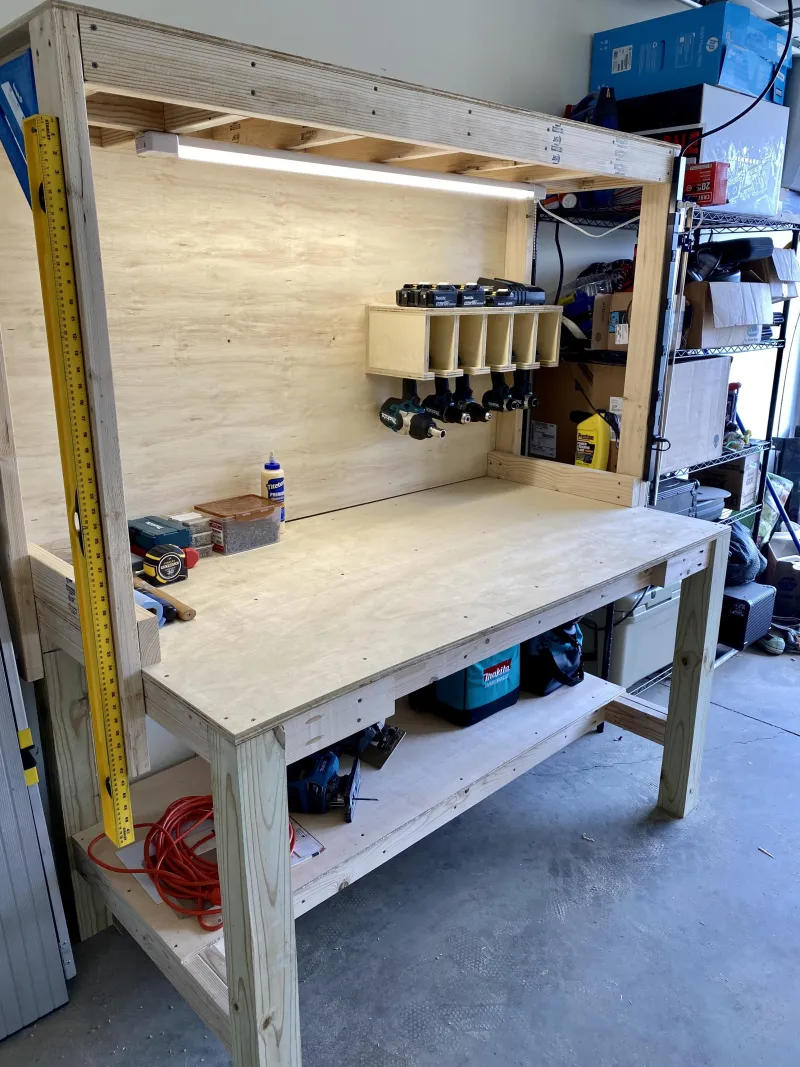
Photo: DIY maker workshop salvaged materials tools workbench community, via i.pinimg.com
Walk into the right warehouse in the Valley on a Saturday morning and you'll find something that looks a little like organized chaos. A woman in safety goggles is cutting sheet metal with a plasma torch. Two guys argue cheerfully over the best way to wire a solar charge controller. Somewhere near the back, a teenager is learning to use a lathe for the first time, guided by a retired aerospace engineer who drove in from Tempe.
This is Phoenix's maker scene — and it's louder, messier, and more alive than most people realize.
Junk Isn't Junk Anymore
The Valley has always had a complicated relationship with its own leftovers. Decades of rapid development, industrial expansion, and the kind of throw-it-away growth that defined Phoenix for much of the 20th century left behind a sprawling inventory of abandoned warehouses, surplus materials, and forgotten equipment. For a long time, that stuff just sat there.
Then people started picking it up.
The maker movement — loosely defined as a culture of hands-on creation, DIY engineering, and open-source problem solving — has been gaining momentum in Phoenix for years. But lately, it feels like it's hit a new gear. Across neighborhoods from South Mountain to the Warehouse District to Maryvale, small collectives and community workshops are popping up in repurposed spaces, stocked with donated tools and salvaged raw materials, and drawing in people who never thought of themselves as builders.
"We had this idea that making things was for professionals or hobbyists with money," says one organizer who runs a community workshop near downtown. "But that's not how it's ever actually worked. People have always built things out of necessity. We're just getting back to that."
Solar, Sawdust, and Second Chances
Take the solar device builders. A small but dedicated group of Valley makers has been quietly constructing off-grid power systems from salvaged panels, reclaimed wiring, and repurposed battery packs — some pulled from electric vehicles destined for the scrap heap. Their goal isn't to sell anything. It's to put working solar setups in the hands of people who can't afford commercial installations.
Workshops pop up in church parking lots and community centers. Attendees leave knowing how to assemble a basic system that can power lights, charge phones, and run a small fan — meaningful stuff when Phoenix summers push triple digits for weeks at a stretch.
Furniture builders are doing something similar with wood. Pallets, demolished cabinetry, reclaimed lumber from teardowns — all of it finds its way into workshops where people learn joinery, finishing, and basic structural design. Some of what gets made ends up in participants' homes. Some goes to community organizations. A few pieces have landed in local businesses that wanted something with a story behind it.
The common thread isn't the material. It's the philosophy: nothing is waste until you decide it is.
Failure as a Feature
One of the things that sets Phoenix's maker culture apart — at least from the sanitized, Instagram-ready version of making that sometimes dominates national coverage — is its comfort with failure.
At the workshops that have taken root here, blown circuits and collapsed prototypes aren't embarrassments. They're curriculum. Experienced makers will often deliberately walk beginners through a process they know won't work the first time, because the point isn't the finished object. It's learning to read what went wrong and try again.
"If you're not breaking things, you're not learning anything," says one fabricator who runs regular weekend sessions out of a converted auto shop in west Phoenix. His workspace is a testament to productive failure: shelves lined with half-finished projects, prototypes that almost worked, and components stripped from things that didn't. "Everything in here taught me something. I just haven't gotten rid of the evidence yet."
That ethos has made the maker space feel unusually welcoming to people who've been told — explicitly or otherwise — that technical skills aren't for them. Women, older adults, recent immigrants, teenagers without access to shop classes at school: they all show up, and they all get handed tools.
The Spaces Themselves
Part of what makes this movement tick in Phoenix specifically is the city's unusual geography of underused space. The Valley's industrial zones, its surplus of strip mall vacancies, its blocks of warehouses that predate the current development boom — all of it creates opportunity for people willing to negotiate cheap leases and put in sweat equity.
Some maker spaces here operate on a membership model, charging modest monthly dues that cover tool maintenance and utilities. Others run entirely on donations and volunteer hours. A few have found creative partnerships with local businesses or nonprofits that provide space in exchange for occasional community programming.
What they share is a kind of scrappiness that feels distinctly Phoenician. Nobody waited for a grant. Nobody waited for the city to build something. They found a space, filled it with tools, and opened the doors.
More Than a Hobby
It would be easy to frame all of this as a charming subculture — interesting, niche, a little quirky. But the people inside the movement push back on that characterization hard.
They'll point to the practical outputs: solar systems that actually work, furniture that actually gets used, irrigation devices built for urban gardens, adaptive tools made for community members with disabilities. They'll talk about the skills transferred, the confidence built, the neighborhoods that now have a place where people of different ages and backgrounds can work alongside each other on something real.
And they'll talk about what it means for Phoenix's identity. A city that has spent so much of its history consuming — land, water, resources, imported culture — is developing a counter-narrative. One where the Valley doesn't just receive things but makes them. Where what's discarded becomes the raw material for what comes next.
"Phoenix has always been a place people came to start over," says one longtime maker who moved here from the Midwest a decade ago. "I think that's what this is, in a way. Taking what's been thrown away and starting over with it."
The plasma torch fires up again. Someone laughs at a mistake. The work continues.
Know a maker, workshop, or community build project the Valley should know about? We want to hear about it. Reach out to The Phoenix at the1phoenix.net.