Rolling Flavors: The Street Vendors Quietly Shaping Phoenix's Food Identity
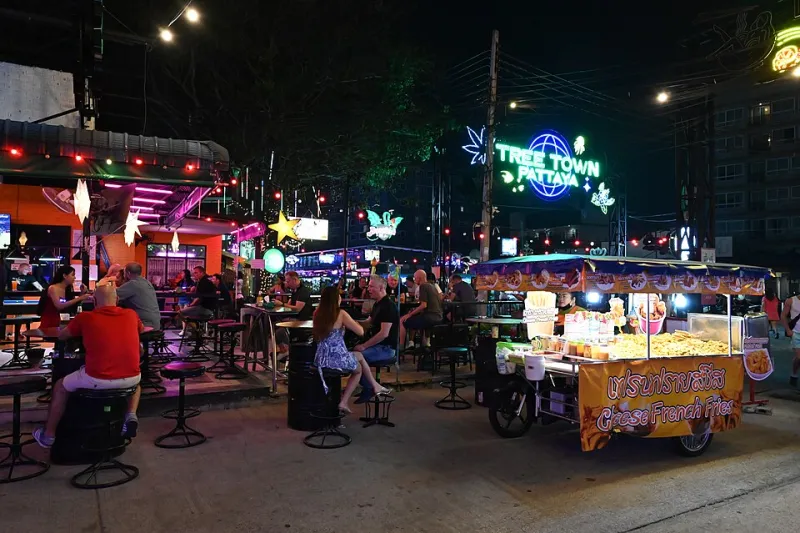
Photo: PattayaPatrol, CC BY-SA 4.0, via Wikimedia Commons
There's a particular kind of magic that happens around 7 p.m. on a Thursday in South Phoenix. The air smells like charred corn and cumin. A hand-painted cart glows under a string of bare bulbs. A line of maybe fifteen people — construction workers, college kids, a couple walking their dog — waits without complaint, because they know it's worth it.
This is the food cart underground, and it's been quietly rewriting Phoenix's culinary story for years.
More Than a Meal Stop
Phoenix doesn't always get credit for its food culture. The national food press tends to spotlight the big-name chefs, the resort restaurants, the James Beard nominations. But ask any longtime Valley resident where they actually eat — where the food hits different — and they'll point you to a cart, a truck, or a pop-up table wedged between a laundromat and a tire shop.
These vendors aren't just filling a gap in the market. They're carrying entire culinary traditions on wheels.
Take Maria Guadalupe Ríos, who has been running her cart near the intersection of 35th Avenue and McDowell for going on six years. She came to Phoenix from Oaxaca in 2009, and her menu reads like a love letter to her home state — tlayudas piled with black bean paste and Oaxacan cheese, memelas, and a mole negro that takes two days to make. "People ask me if I'm going to open a restaurant," she says, laughing. "I tell them, this is my restaurant. It's just that my dining room moves."
For Ríos, the cart isn't a stepping stone. It's the destination. The mobility, the low overhead, the direct relationship with her customers — it all adds up to something she couldn't replicate inside four walls.
The New Fusion Frontier
Not every cart in the Valley is about preservation, though. A growing number of vendors are doing something more experimental — blending the culinary languages of two or three cultures into something that couldn't exist anywhere but Phoenix.
Samuel Tesfaye grew up eating injera and doro wat at his family's table in Addis Ababa before immigrating to Arizona in his early twenties. His cart, which pops up at the Roosevelt Row weekend markets and a rotating cast of Tempe parking lots, serves what he calls "East African street food with a Southwest accent." Think berbere-spiced lamb tucked into a warm flour tortilla, or lentil stew ladled over green rice flecked with roasted Hatch chiles.
"Phoenix is a city where people are always moving, always mixing," Tesfaye says. "My food is the same way. It doesn't stay in one place."
That attitude is showing up all over the cart scene. Vietnamese banh mi with jalapeño-spiked pork carnitas. Navajo fry bread topped with Korean bulgogi. Chamoy-drizzled elotes that somehow work as dessert. The Valley's food cart circuit has become one of the most interesting places in the American Southwest to eat precisely because it operates outside the constraints of what a "real" restaurant is supposed to serve.
The Hustle Behind the Cart
It would be easy to romanticize all of this, but the reality of running a food cart in Phoenix is genuinely hard work. City permitting, health inspections, finding reliable commissary kitchen access, scouting locations, competing for spots at weekend events — it adds up fast. Many vendors work second jobs. Most start before sunrise.
The pandemic hit the cart community unevenly. Some vendors who had been fixtures at office parks and lunch crowds lost their entire customer base overnight. Others found new footing at neighborhood markets and open-air gatherings as Phoenicians, stuck at home, rediscovered their own zip codes.
"That time taught people to look around," says Leticia Vargas, who runs a paleta and agua fresca cart that's become a neighborhood institution in Maryvale. "They started noticing us. Some of these families, they had no idea there was a cart two blocks from their house."
Variance in city policy has also been a long-running friction point. Phoenix's regulations around mobile vending have historically been more restrictive than in cities like Austin or Los Angeles, though advocates and vendors have pushed — with some success — for more accessible permitting pathways in recent years. It's an ongoing conversation, and one that matters a lot to the people whose livelihoods depend on being able to park and cook.
A Map of the Valley, One Cart at a Time
What's striking, when you spend time in this world, is how geographical the cart scene is. Different neighborhoods have different flavors — literally. The stretch along Van Buren near the airport is a different culinary universe than the weekend cluster near Desert Ridge. The cart culture in Chandler has a different energy than the one in Glendale.
In that way, the food cart underground functions like a living map of Phoenix's communities. It shows you where people are from, what they miss, what they're building. It reflects the city's demographics in real time, without a PR strategy or a Yelp algorithm mediating the experience.
Phoenix has always been a city of arrivals — people who came from somewhere else and made something new here. The food carts are, in many ways, the most honest expression of that story. They ask for nothing except that you show up hungry and open-minded.
Where to Start
If you've never really explored the Valley's mobile food scene, the Roosevelt Row weekend market is a solid entry point — it draws a rotating mix of vendors and has the kind of casual, browse-around energy that makes it easy to try three or four different things in one afternoon. The Maryvale neighborhood is worth a dedicated trip for anyone serious about Mexican regional cuisine. And if you're in Tempe on a weekday evening, keep your eyes open near the Mill Avenue corridor — the carts that set up there tend to draw a crowd for a reason.
The best advice, honestly? Follow your nose. And when you find something good, tell your people. These vendors run on word of mouth, on regulars, on community. That's always been true. In Phoenix, right now, it's truer than ever.