Building Outside the Rules: Meet the Valley Rebels Reinventing What Home Means in Phoenix
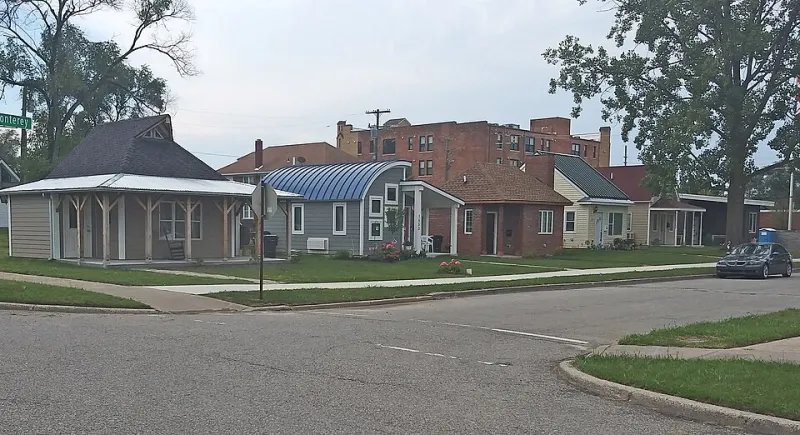
Photo: Andrew Jameson, CC BY-SA 4.0, via Wikimedia Commons
Drive through almost any Phoenix neighborhood these days and you'll spot the signs — literally. "For Rent: $2,400/mo." "New Luxury Apartments Coming Soon." "Priced From the $500s." For a city that used to pride itself on affordable desert living, the math has stopped making sense for a whole lot of people.
But tucked behind those glossy billboards and freshly poured foundations, something else is happening. A loose, scrappy, deeply determined network of Phoenicians is building — with their hands, their savings, and a whole lot of stubbornness — a different kind of answer to the Valley's housing crunch.
The Numbers Nobody Wants to Say Out Loud
Phoenix's median home price has more than doubled since 2019. Rental costs have followed a similar trajectory, with one-bedroom apartments in central Phoenix now averaging well above $1,500 a month. For service workers, artists, teachers, and recent grads — basically the people who make a city feel like a city — those numbers are a wall.
"People act like the market is this neutral force," says Dara Whitfield, a community organizer who's been working on housing access issues in South Phoenix for the better part of a decade. "But the market was built by decisions people made. Which means people can make different decisions."
Whitfield is one of the driving forces behind a cooperative housing collective that currently manages three properties in the South Mountain area. Residents share ownership stakes, split maintenance responsibilities, and pay well below market rate — not because anyone's losing money, but because profit extraction isn't the point.
Tiny Homes, Big Ideas
On the eastern edge of Mesa, a patch of land that once sat empty and sun-baked is now home to fourteen compact dwellings, each one under 400 square feet and built almost entirely by the people who live in them. The community, which operates under a land trust model, doesn't have a snappy name or a slick website. What it does have is a waiting list.
Marco Delgado, 34, moved into one of the homes two years ago after spending eighteen months couch-surfing following a rent hike that pushed him out of his Tempe apartment. He'd never swung a hammer in his life before joining the build crew.
"I built my own house," he says, and lets that sentence sit for a second. "That's not something I ever thought I'd be able to say. And now I actually own a piece of something. My name is on a deed."
The land trust model — where a nonprofit holds the land while residents own the structures — keeps costs low by removing land speculation from the equation. It's not a new concept nationally, but it's relatively rare in Arizona, where land has historically been cheap enough that nobody thought to protect it from price spikes. That calculation has changed.
Sweat Equity and Shared Walls
Cooperative living gets a bad rap in some circles — visions of overcrowded communes and passive-aggressive chore charts. But the co-living spaces sprouting up across central Phoenix look a lot less like a 1970s experiment and a lot more like a practical response to a broken system.
One such space near the Roosevelt Row arts district houses eight adults ranging in age from 26 to 61. They share a kitchen, a backyard with a productive vegetable garden, and a monthly housing cost that comes in around $650 per person — a number that sounds almost fictional by current Phoenix standards.
Resident Tamsin O'Brien, a ceramicist who's shown work at several Valley galleries, says the arrangement lets her actually make art for a living instead of treating it as a weekend hobby while working a second job.
"Most of my artist friends have left Phoenix," she says, not without some bitterness. "They couldn't afford to stay. I'm still here because of this house."
The co-op's structure means decisions get made collectively — sometimes messily, always slowly — but the tradeoff is stability that market-rate renting simply doesn't offer.
Fighting the Zoning Wars
None of this is easy, and a lot of it runs headlong into Phoenix's zoning codes, which were largely written for a different era and a different kind of city. Tiny homes on wheels exist in a legal gray zone. Accessory dwelling units — the backyard casitas and garage conversions that could dramatically increase housing supply in established neighborhoods — are still tangled in red tape in many parts of the Valley.
A small but vocal group of housing advocates has been showing up to city council meetings, planning commission hearings, and neighborhood association gatherings to push for changes. Progress is slow and often frustrating.
"You spend three hours at a public meeting to get two minutes at the microphone," says Whitfield. "And then you do it again next month. That's the work."
Some wins have come through. Phoenix has loosened certain ADU restrictions in recent years, and a handful of council members have shown genuine interest in land trust legislation. It's not enough, say advocates, but it's movement.
What Community Actually Costs
There's a tendency to frame alternative housing as a sacrifice — smaller spaces, shared resources, less privacy. The people actually living this way push back on that framing pretty hard.
"I have a 300-square-foot house and I have neighbors who bring me food when I'm sick," says Delgado. "My old apartment was twice the size and I didn't know anyone's name."
That's not a knock on conventional housing. It's an observation about what gets optimized for when housing is treated purely as an investment vehicle rather than a place where people build lives.
The DIY housing movement in Phoenix isn't anti-development or anti-growth. Most of its participants would happily see more housing built across the Valley. What they're skeptical of is the assumption that market-rate development alone will solve a crisis the market helped create.
What Comes Next
The people doing this work are realistic about scale. Three co-ops and a tiny home village don't solve a regional housing shortage. But they do something else: they prove the concept. They demonstrate that people with limited capital can, with enough creativity and collective will, build something stable.
And in a city that's always had a soft spot for people who show up and figure it out, that might matter more than it sounds.
"Phoenix was built by people who said, 'This is a crazy place to put a city, let's do it anyway,'" says Whitfield. "That energy is still here. We're just pointing it at a different problem."
For anyone curious about getting involved, organizations like Wildfire: Community Advancement Project and local chapters of the Community Land Trust Network are good starting points. The Valley's housing crisis isn't going anywhere — but neither are the people determined to build their way through it.