From Rust to Renaissance: Inside the Valley's Warehouse Art Revolution
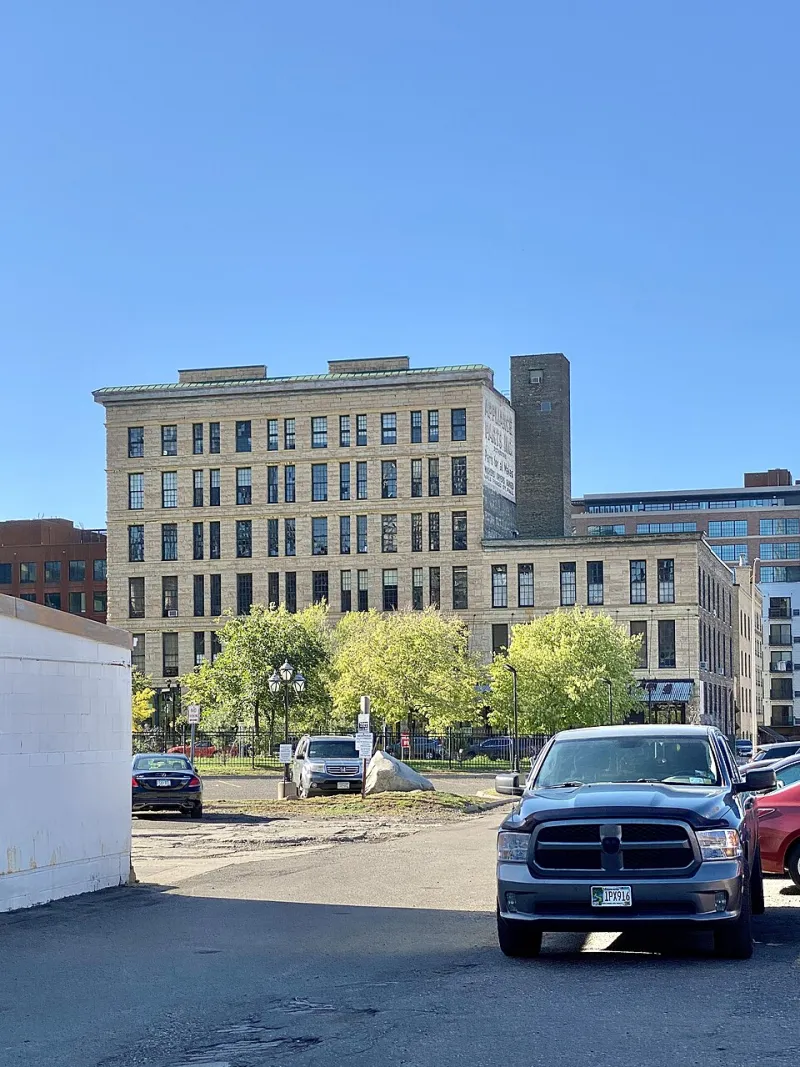
Photo: w_lemay, CC BY-SA 2.0, via Wikimedia Commons
There's a particular kind of magic that happens when you step through a rusted roll-up door into a converted Phoenix warehouse. The concrete floors are scuffed with decades of history. The ceiling joists still carry the ghost outlines of machinery long since hauled away. And yet, somehow, the space hums—with paint fumes, rehearsal noise, the low thrum of a laser cutter, or the smell of fresh espresso from a pop-up café wedged between two sculptor's studios.
This is the Valley's second wave. Not the sprawl of the '80s or the condo boom of the 2000s. This one is quieter, grittier, and arguably more interesting. It's a story about what happens when artists, entrepreneurs, and community builders look at a city's discarded bones and see something worth saving.
The Buildings Nobody Wanted
Phoenix has always had a complicated relationship with its industrial past. Mid-century manufacturing corridors along Grand Avenue, the warehouse clusters of South Phoenix, the forgotten flex-space strips near the Scottsdale Airpark—these were the city's workhorse zones, built for function and largely ignored once that function moved on.
When manufacturing shifted, the buildings sat. Some were repurposed into self-storage. Others were razed for parking lots or strip malls. But a handful caught the eye of people who understood that raw space, in the right hands, is an invitation.
"I drove past this building for two years before I finally stopped and looked in the window," says Marisol Reyes, a ceramicist who now operates a studio and teaching space in a former auto-parts warehouse near downtown. "The bones were incredible. High ceilings, north-facing skylights someone had added in the '70s—it was basically designed for what I needed, just nobody had connected those dots yet."
Reyes signed her lease in 2019, spent six months doing most of the renovation herself, and opened her doors to students and fellow artists shortly before the pandemic arrived to complicate everything. She survived it. The space didn't just survive—it grew.
Grand Avenue and the Blueprint for What Came Next
To understand the current warehouse renaissance, you have to start on Grand Avenue, Phoenix's original arts corridor. The stretch running northwest from downtown has been quietly incubating this model for over two decades. Galleries, studios, and event spaces have occupied its aging storefronts and industrial bays long enough that the neighborhood now has the kind of layered, lived-in creative identity most cities spend millions trying to manufacture.
The Grand Avenue Arts & Preservation group has been central to that story, advocating for the corridor's character against the constant pressure of redevelopment. Their work helped establish a template: document the history, activate the spaces, build community ownership, and make the case to city planners that creative density is economic value.
That model is now spreading. You can see it playing out in South Phoenix, where longtime residents are partnering with artists to reclaim industrial lots that gentrification hasn't yet reached—and trying to make sure that when development does come, it doesn't push out the people who were there first.
South Phoenix: Community Stakes in the Creative Boom
The tension between preservation and displacement is sharpest in South Phoenix, a historically Black and Latino neighborhood that has long been the city's most overlooked quadrant. Its warehouses and industrial parcels are now drawing serious developer interest, which is a double-edged reality for the artists and organizers who've been working there for years.
"We're not interested in being the vanguard of gentrification," says Darnell Washington, a muralist and community organizer who co-founded a creative cooperative in a former printing warehouse near Baseline Road. "The goal is to build something that benefits the people who already live here—not to make the neighborhood attractive for people who'll price those same folks out."
Washington's cooperative runs free studio hours for neighborhood youth, hosts community events, and deliberately keeps its programming bilingual. It also operates on a sliding-scale membership model that allows working artists without gallery representation to access professional-grade equipment and workspace. It's a social enterprise as much as an arts organization, and that distinction matters.
The city of Phoenix has taken some notice. Recent rounds of arts infrastructure funding have directed dollars toward exactly these kinds of hybrid community-creative spaces. Whether the support scales fast enough to outpace market pressure is, to put it gently, an open question.
The Entrepreneurs Betting on Weird Spaces
Not every warehouse conversion carries the weight of a community land-use debate. Some are simply the result of creative entrepreneurs spotting an opportunity and running with it.
Take the pair of college friends who turned a decommissioned cold-storage facility near the Warehouse District into a multi-use venue that hosts everything from experimental theater runs to private corporate events to weekend vintage markets. They didn't set out to save the building—they were looking for somewhere affordable to throw a party—but the space grabbed them.
"We did one event there and immediately knew we had to figure out how to make it permanent," says one of the co-founders, who asked to be identified only by his first name, Marcus. "The acoustics were wild, the loading dock turned into the best outdoor bar setup you've ever seen, and people kept asking us when we were doing the next one."
Three years in, they've built a reputation as one of the more adventurous event spaces in the Valley, programming things that wouldn't fit neatly into a conventional venue. The industrial aesthetic isn't a design choice—it's just what the building is. And increasingly, that authenticity is exactly what Phoenix's creative class is looking for.
What the City Stands to Gain—and Lose
Urbanists and economic development types have a term for what's happening in these warehouse corridors: creative placemaking. The idea is that arts and culture activity doesn't just enrich a neighborhood aesthetically—it drives foot traffic, attracts ancillary businesses, raises property values, and builds the kind of neighborhood identity that keeps residents invested.
Phoenix has been slower than cities like Austin, Denver, or Portland to fully leverage this dynamic, partly because of its car-centric geography and partly because of a civic culture that has historically prioritized growth over preservation. But the momentum is shifting. The Roosevelt Row Arts District, the ongoing activation of the warehouse blocks near Chase Field, and the emergence of new creative nodes in Tempe and Mesa all suggest that the Valley is beginning to understand what it has.
The risk, of course, is the same one that has played out in every American city where creative communities have anchored neighborhood transformation: the artists make a place interesting, the developers make it expensive, and the artists move on—or out. Phoenix's warehouse communities are acutely aware of this cycle and, in many cases, actively trying to structure themselves to survive it.
A City Still Writing Its Story
What makes the Phoenix warehouse scene genuinely compelling isn't any single building or any single artist. It's the accumulation—the sense that something real is being built here, in spaces that the city had essentially written off.
Marisol Reyes, back in her ceramics studio, puts it plainly: "People always talk about Phoenix like it doesn't have culture. But it has so much culture. It just doesn't always look the way people expect culture to look. It looks like this—like a warehouse with good light and people who decided to show up."
That might be the most honest summary of what's happening across the Valley right now. People are showing up to spaces nobody else wanted, making something out of them, and in the process, making the city a little more itself.
The desert has always been good at second acts. Turns out its buildings are too.