Tulle, Cumbias, and a Very Tight Spreadsheet: How the Valley Builds a Quinceañera
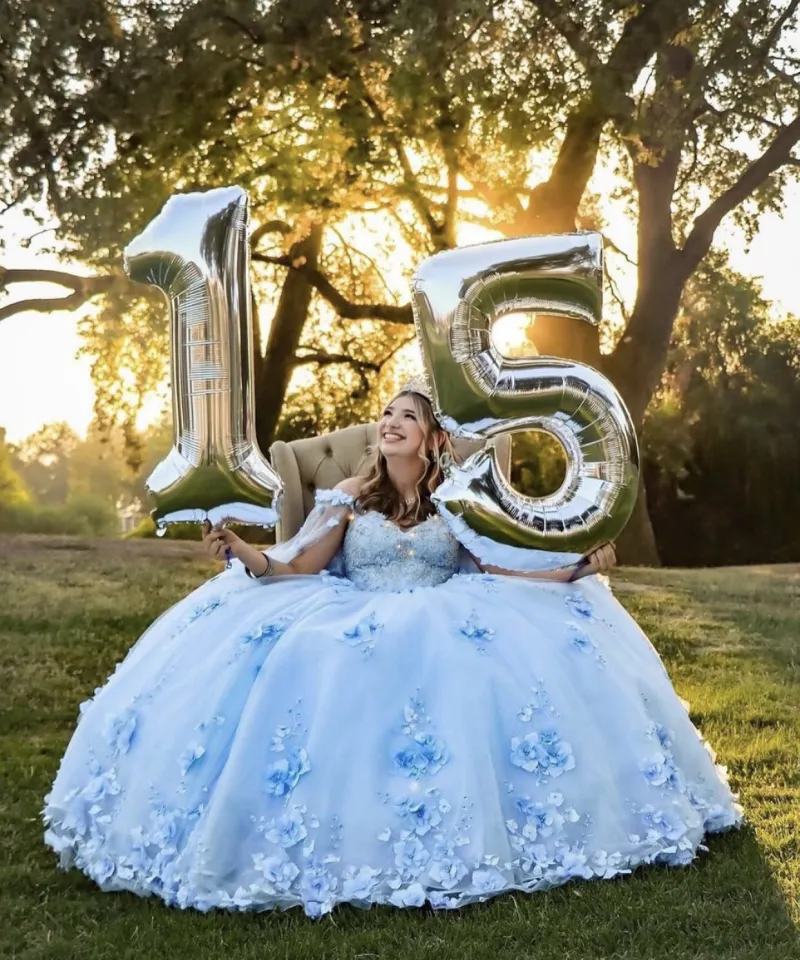
Photo: quinceanera dress fitting family dress shop celebration, via eventsbyraina.com
The fitting room on the west side is standing room only on a Saturday afternoon, and nobody in it is sitting down anyway.
There's the birthday girl, seventeen days out from her party, in the third dress she's tried on this hour. There's her mother, holding a phone at chest height, narrating into a group chat. There's her grandmother, who has said nothing for ten minutes and is therefore the most important person in the room, and an aunt who has been delegated the job of holding the shoes.
The dress is lavender with a bodice that's been pinned twice. When the owner of the shop pulls the curtain back, the grandmother makes a small noise.
“That's the one,” she says. And that's that.
What follows is not just a party. It's a small, locally sourced industry — a supply chain of seamstresses, bakers, choreographers, DJs, decorators, photographers, and event-hall owners who know precisely how to build a fifteen-year celebration on a working-family budget without letting the seams show.
Six Months, Fourteen Vendors
Ask anyone in the business and they'll give you the same rough schedule. Nine to twelve months out: book the hall. The good ones in Maryvale, Guadalupe, and west Phoenix are already taking dates into late 2027 and often hold a deposit with nothing but a text message and a promise.
Four to six months out: the dress, the photographer, the DJ. Two months out: the cake tasting, the invitations, the choreographer. Three weeks out: the final head count, the favors, the seating chart that will be redrawn at least four times.
“The hall is the bottleneck,” says Yolanda Cepeda, who has run a banquet space near 51st Avenue for nineteen years. “Everything else can be moved. The hall can't. Families that wait until spring for a summer party end up in a conference room in a hotel, and everyone can feel it.”
The Dress Is Only the Beginning
A new quince dress in the Valley runs anywhere from about $450 at the low end to $1,800 and up for something with serious beadwork. Alterations add another $100 to $250, because the dresses are cut long and everything has to be brought up.
The real story is what happens after the party. A thriving resale and rental market has grown up around these dresses — shops that buy back gowns, Facebook groups where a family posts a dress with a photo and a price, and what one Phoenix seamstress calls “quince closets,” where aunts and cousins rotate the same three dresses through five girls in one extended family.
“Nobody's ashamed of a secondhand dress anymore,” says the seamstress, Marisol, who has been altering gowns out of a home studio for twenty-two years. “Honestly? The grandmothers started it. They were the ones saying, why would you pay twice?”
What $8,000 Actually Buys in 2026
Every family's number is different, but the shape of the budget is remarkably consistent for a 150-guest party. Here's how it tends to break down at the mid-range:
- Hall rental: $1,200–$2,500, often including tables and chairs
- Catering: $12–$18 a plate, frequently a family friend or a taqueria doing a bulk order instead of a caterer
- DJ or DJ-and-lights: $600–$900
- Photographer: $700–$1,200
- Dress, alterations, shoes: $700–$1,400
- Cake and dessert table: $250–$450 (often split with a homemade pan dulce contribution nobody admits to)
- Choreographer: $350–$700 for a package of practices
- Invitations, favors, misc.: $300–$600
Add it up and it lands somewhere between $6,000 and $10,000 for a comfortable mid-range party — which is why the sponsor system still runs the show.
Padrinos: The Original Crowdfunding
In the traditional structure, specific elements of the celebration are underwritten by padrinos and madrinas — godparents and relatives who take responsibility for the cake, the DJ, the flowers, the limo, sometimes even the dress. It's a distribution network disguised as etiquette.
That system hasn't gone anywhere. It has just gotten more efficient. Families now run group chats with a running list of who's covering what, and yes, the collection happens over payment apps. One mother described a spreadsheet shared with eleven relatives, updated in real time, with a tab for deposits.
“The padrinos are how a $9,000 party happens on a $3,000 income,” Cepeda says. “People think it's about showing off. It's the opposite. It's about everybody putting in a piece.”
Choreography and the TikTok Problem
Ask a choreographer what's changed most and you'll hear about the surprise dance. The traditional vals — the waltz the quinceañera dances with her father and her court — is still the spine of the evening. But the second number, the one that starts with a record scratch and turns into a medley, has become the part everyone actually rehearses for.
“It used to be a salsa or a cumbia and that was it,” says a Gilbert-based choreographer who teaches out of a rented studio and a garage in equal measure. “Now it's three songs spliced together, a TikTok routine in the middle, and an uncle who volunteered to be lifted. I've choreographed around a knee brace more times than I can count.”
Practices run six to ten weeks, usually on weekday evenings, often in a church hall or a family garage with a Bluetooth speaker and a rolled-up rug serving as a dance floor. The cost stays low because the choreographer knows exactly how much room there is in the budget — and because half the court is made up of cousins who aren't paying anything anyway.
Beyond the Traditional Template
One of the quieter shifts in the Valley is who the party is for. Quinceñeros — the fifteen-year celebrations for boys, long common in parts of Mexico and Central America — have become more visible. So have celebrations that adapt the format for nonbinary teens, sometimes called quinceañx, with the family keeping the waltz and the court and rewriting the rest.
You can also see the tradition bending around Phoenix's particular mix of cultures. Bilingual emcees are standard. Vietnamese and Filipino families have folded the format into their own milestone parties, sometimes with a second outfit change mid-evening. Somali and Sudanese families have picked up pieces of it too, drawn to the same thing everyone else is: a room full of people who showed up to say something out loud about a kid growing up.
“The template is flexible,” Cepeda says. “That's why it's survived. It's not a rulebook. It's a shape you pour your family into.”
The Hall Owners
The unsung backbone of all of this is a modest building with a tile floor, a kitchen window, and a parking lot that fills up by eight. Hall owners across the west side describe a schedule that books Friday through Sunday nearly year-round, with Sunday afternoons now going to smaller, cheaper celebrations for families who'd rather spend on the dress than the venue.
A few have introduced weekday mini-packages — a four-hour slot, a smaller guest list, a stripped-down setup — that let a family throw the party without losing the party.
Back at the dress shop, the lavender gown has been bagged and tagged. The grandmother has been helped into a chair. The aunt is still holding the shoes.
“Eighteen days,” the mother says to the shop owner, on the way out. “That's fine. That's plenty of time.”
It is not plenty of time. Everyone in the room knows it. But the appointment is booked, the dress is paid down, and a spreadsheet somewhere in the Valley just got one more line item — and that's how a tradition stays alive.