Disco Lights and Rental Skates: The Valley's Roller Rinks Are Back on a Roll
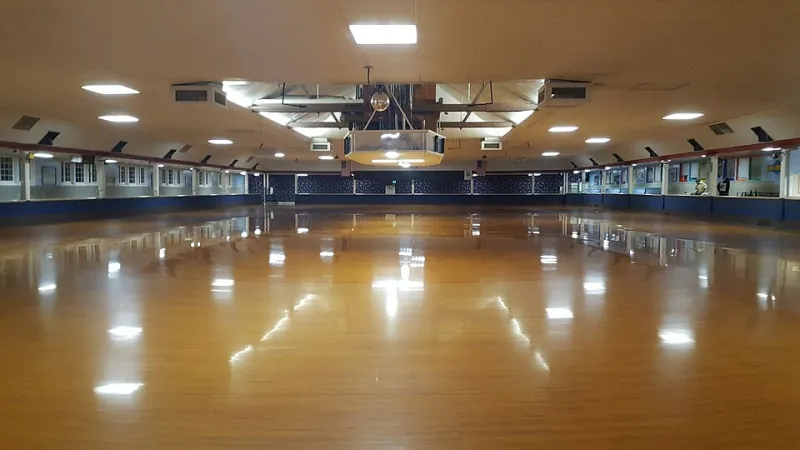
Photo: Another Believer, CC BY-SA 4.0, via Wikimedia Commons
It's 8:42 on a Thursday night in east Mesa, and the houselights just dropped. A mirror ball the size of a laundry basket starts turning. Somewhere behind a scuffed plexiglass window, the DJ pushes a cumbia remix of a song your mom knows every word to through speakers that have been bolted to that ceiling since the Reagan administration.
Then the floor fills. Not all at once — skaters trickle in from the carpeted edges like water finding a seam. A man in his fifties wearing tube socks and a faded Diamondbacks jersey. Three teenagers in matching tops, filming each other. A grandmother who has clearly done this ten thousand times and a six-year-old clutching the wall with both hands.
“Thursday used to be dead,” says Dana Whitlock, who has managed Valley rinks for the better part of two decades and now runs the schedule at a rink off University Drive. “Ten years ago I couldn't give away a Tuesday. Now we've got themed nights, a waitlist for the beginner session, and people driving down from Anthem because their kid saw skating on their phone and wouldn't let it go.”
The Comeback Nobody Scheduled
Roller rinks were supposed to be extinct. The '80s boom, the slow bleed of the '90s, the pandemic closures that finished off the stragglers — the story writes itself. And yet the rooms that survived are louder and fuller than they've been in years, from Glendale to Tempe to a stubborn old building in Sunnyslope that still has the original mural on the outer wall.
The reasons aren't mysterious. A rink is one of the last places in the Valley where a family of five can walk in with no plan, no reservation, and no minimum spend, and still get three hours out of the evening. Admission runs around twelve bucks, rentals about five more. Nobody's asking you to order a second round.
It also happens to be air-conditioned in July, which in this city is not a small thing.
Why a Rink Works When a Bar Doesn't
There's no age gate at the door and no etiquette test once you're inside. A twelve-year-old and a sixty-year-old can be on the same floor, going the same direction, to the same song, and neither one finds it strange.
Whitlock calls it the great equalizer, then immediately makes fun of herself for saying it. “Fine, it's a cliché. But watch the floor on a Saturday night. You've got church groups, you've got birthday parties, you've got couples on their fourth date and couples on their thirtieth anniversary. Nobody's getting priced out of the room.”
Several rink operators told me the same thing in different words: they're not competing with clubs. They're competing with the couch. And business picked up noticeably once families started looking for somewhere to go that didn't require a two-week planning cycle or a hundred-dollar tab.
The DJ Booth Is the New Front Porch
Denise Arreola, who spins as DJ Sock Hop every other Friday, keeps a running list of requests on the back of a receipt. The floor tells her what it wants, she says, and the floor is not subtle.
“I'll go from '70s soul to cumbia to a line dance to something off the radio right now, and if I get it wrong the room goes flat in about thirty seconds,” she says. “It's the most honest crowd I've ever played for. Nobody's too cool to look happy.”
Themed nights have become the engine of the whole thing — '80s night, country night, a surprisingly cutthroat adults-only session that draws a crowd that takes its corners very seriously. Birthday-party bookings fill the weekend afternoons, which is what actually pays the bills.
Beginner Hour and the Fear Factor
Sunday mornings are for the people who are scared. Lights all the way up, no strobe, no fog machine, no birthday party screaming through the wall. Orange cones divide the floor into lanes. A rack of PVC-and-tennis-ball walkers sits by the rental counter for adults who haven't stood on wheels since middle school.
“I've had grown men whisper to me that they're nervous,” Whitlock says. “Sir. It's a Sunday. Half the room is nervous.”
Beginner attendance has climbed steadily, and the rink now runs a four-week adult class that sells out. Most of those students, she says, come back on their own within a month — usually on a Thursday, usually to the back corner of the floor where the light is dimmer.
The Math of Keeping the Lights On
None of this is easy money. A rink is a warehouse with a slippery floor and an appetite for electricity. Operators describe July utility bills that can clear several thousand dollars, a resurfacing job that runs into the tens of thousands and comes around once a decade, and a rental fleet of a few hundred pairs of skates that need new wheels, new laces, and new bearings constantly.
Insurance is a line item nobody likes to talk about. So is staffing a snack bar that was never designed to turn a profit.
Which is why the revival is less a boom than a slow, stubborn stabilization. The rinks that are thriving now spent years doing the unglamorous work — booking church groups on weekday afternoons, renting the room to quinceañera rehearsals and school fundraisers, and keeping the prices low enough that a family can come back next month.
What Gets Lost When a Rink Closes
Every operator I spoke with had a version of the same story: a kid who came in three times a week, learned to skate backwards, and later worked the rental counter. Rinks are one of the few places a teenager can get a first job that involves a skill, a uniform, and a room full of witnesses.
When one closes, that whole ladder disappears — the birthday parties, the after-school crowd, the adults who come back at forty because they never found anything else that felt like this.
At 9:55 the music drops to something slower and a voice over the speakers announces the last song. “Backwards if you can,” the DJ says. “Fancy if you're feeling lucky.”
A dozen people immediately start skating backwards. A few of them are showing off. Most of them are just grinning at nobody in particular.
Then the lights come up, and everyone shuffles toward the carpet in that slightly wobbly, knocked-kneed walk of people who've been on wheels for three hours — tired, sweaty, and already planning to come back on Thursday.